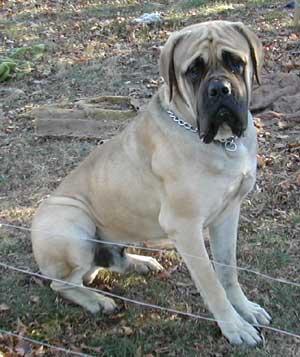
Bullmastiff
Temperament
About the Bullmastiff
The Bullmastiff is a purpose-built working dog with a precise origin story. In the 1860s, English gamekeepers on large private estates faced a serious problem: poaching had become epidemic, and the penalties for gamekeepers who shot trespassers had grown increasingly severe. They needed a dog powerful enough to run down and pin a man without mauling him — a silent, fast, and controllable guardian rather than a killer. The solution was a deliberate cross between the English Mastiff and the now-extinct Old English Bulldog, engineered at a ratio of roughly 60 percent Mastiff to 40 percent Bulldog. The Mastiff contributed size, temperament, and tracking ability; the Bulldog contributed tenacity, courage, and a lower center of gravity. The resulting animal — dark-coated to work invisibly at night — became known as the 'Gamekeeper's Night Dog.'
The breed's documented development accelerated through the late 19th century, with the Kennel Club in England granting formal recognition in 1924. The American Kennel Club followed in 1933, placing the Bullmastiff in the Working Group, where it remains today. As of the most recent AKC rankings, the Bullmastiff sits at approximately 67th in breed popularity out of 205 recognized breeds — a middling position that reflects a breed with a devoted following but not mainstream appeal, which has helped preserve its working character.
The American Bullmastiff Association, founded in 1942, serves as the AKC parent club and maintains the breed standard as well as health and breeder education programs. The ABA is the primary authority for breed standards in the United States and runs a well-regarded health committee that tracks genetic disease trends across the population.
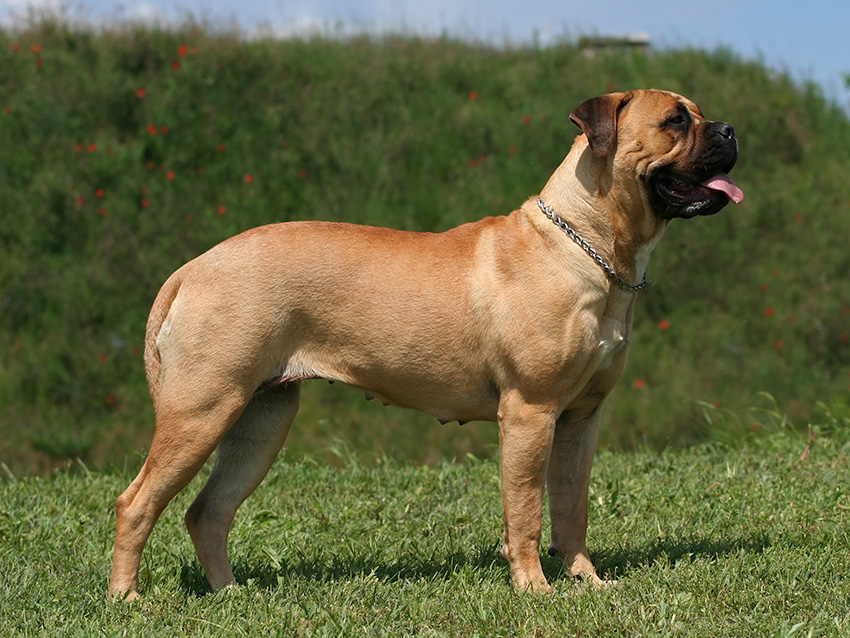
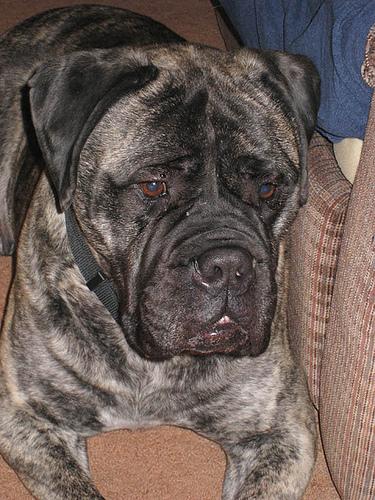
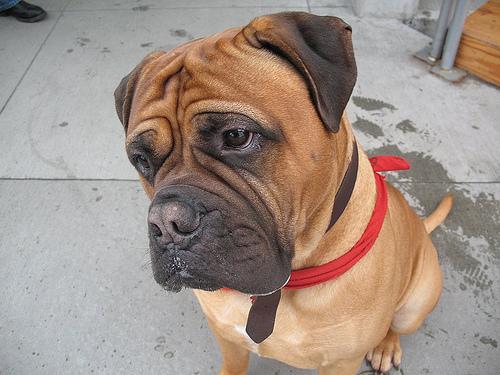
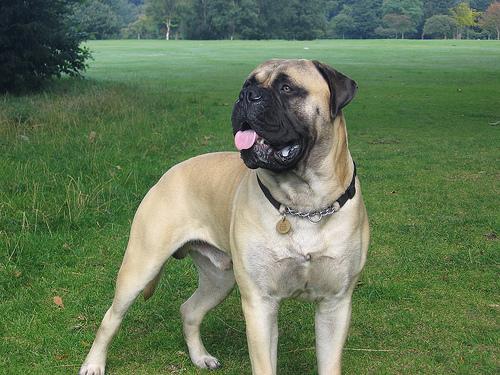
What distinguishes the Bullmastiff from its parent breeds is worth understanding clearly. The English Mastiff is larger and more passive; the Bulldog (modern) is far smaller and brachycephalic to a debilitating degree. The Bullmastiff occupies a deliberate middle space — still brachycephalic, but less severely so than a modern Bulldog, and considerably more athletic than a Mastiff of equivalent weight. At 100 to 130 pounds and 24 to 27 inches at the shoulder, the Bullmastiff is imposing but not cumbersome. Its short, dense coat comes in three recognized colors — fawn, red, and brindle — always with a dark muzzle that remains one of the breed's most distinctive visual features. The combination of a guardian's instincts, a calm household temperament, and a physically formidable build makes the Bullmastiff genuinely unlike any other Working breed.
At a Glance
Quick Facts
- Breed Group:
- Working
- Bred For:
- Estate guardian
- Origin:
- England
- Life Span:
- 8 - 12 years
- Weight:
- 100 - 130 lbs
- Height:
- 24 - 27 in
💰 Bullmastiff Cost Guide
Food · Vet · Grooming · Insurance · Full breakdown
Frequently Asked Questions
What is the temperament of a Bullmastiff?
Bullmastiffs are known to be docile, reliable, devoted, alert, loyal, reserved, loving, protective, powerful, calm, courageous, affectionate, friendly. This combination of traits makes them excellent companions for families with children. Their temperament is influenced by both genetics and proper socialization from an early age.
How much exercise does a Bullmastiff need?
Bullmastiffs have low energy levels and require minimal daily exercise, typically 15-30 minutes of gentle activity.
How often should I groom my Bullmastiff?
Bullmastiffs need moderate grooming including brushing 2-3 times weekly and regular maintenance.
How do I train a Bullmastiff?
Bullmastiffs are highly trainable and typically respond well to positive reinforcement methods.
Are Bullmastiffs good with children?
Bullmastiffs are excellent with children. Their natural patience, gentle nature, and resilience make them outstanding family dogs. They typically form strong bonds with children and tend to be forgiving of the occasional accidental rough handling that can occur with younger kids. Remember that proper socialization and teaching children appropriate interaction with dogs are always important, regardless of breed.
What makes the Bullmastiff unique compared to other dog breeds?
The Bullmastiff stands out from other breeds due to its rich heritage from England, natural protective instincts. This unique combination of characteristics makes them special among dog breeds and appeals to owners who appreciate these distinct qualities. Understanding these traits helps provide appropriate care tailored to their specific needs.
What should I know before getting a Bullmastiff?
Before bringing a Bullmastiff into your home, potential owners should consider: They have relatively low exercise needs (2/5), making them suitable for less active households. They typically excel in family environments with children (5/5 child-friendliness). They're typically highly trainable (4/5) and eager to learn. Their large size requires adequate living space. They may be prone to breed-specific health issues including Hip Dysplasia, Elbow Dysplasia, Bloat (GDV), Cancer, Progressive Retinal Atrophy, Brachycephalic Syndrome. Additionally, researching reputable breeders or rescue organizations is essential for finding a healthy, well-socialized Bullmastiff. Understanding these factors will help ensure a good match between the breed and your lifestyle, leading to a happy relationship for both you and your dog.
What were Bullmastiffs originally bred for?
Bullmastiffs were originally bred for estate guardian. This protective background explains their naturally alert, territorial nature and sometimes reserved attitude toward strangers. As part of the Working group, they share characteristics with other breeds developed for similar purposes. Understanding your Bullmastiff's breeding heritage helps explain many of their natural behaviors and instincts, which can be channeled appropriately through training and enrichment activities. Even though modern Bullmastiffs are primarily companions, these inherent traits remain part of their genetic makeup.
How long do Bullmastiffs typically live?
The average lifespan of a Bullmastiff is 8 - 12 years. With proper care including quality nutrition, regular veterinary check-ups, appropriate exercise, and preventative healthcare, some Bullmastiffs may live beyond this range. Genetics, environment, and healthcare all play important roles in determining longevity.
Are Bullmastiffs good family dogs with kids?
Bullmastiffs can be excellent family dogs, but the match depends heavily on socialization and supervision. The breed is naturally gentle and patient with children they are raised alongside, and their calm, affectionate temperament makes them genuinely good companions in a family setting. That said, their size alone — 100 to 130 pounds of muscle — means that even a friendly, playful Bullmastiff can accidentally knock over a small child. Most Bullmastiff breed organizations recommend supervision around children under 6 simply as a size-management precaution, not because of temperament concerns. The breed's protective instinct also means early socialization is critical: a well-socialized Bullmastiff distinguishes between rough-housing children and actual threats with good judgment; an under-socialized one may misread play as danger. As with any large working breed, the training and socialization investment made in the first two years determines how the dog functions around children for the rest of its life.
How much exercise does a Bullmastiff need daily?
The Bullmastiff has a low to moderate exercise requirement relative to its size, which often surprises new owners expecting a high-energy giant breed. Two 20- to 30-minute walks per day is sufficient for most adult Bullmastiffs, supplemented with some free time in a securely fenced yard. The breed is not built for sustained aerobic activity — its brachycephalic anatomy limits heat dissipation and respiratory efficiency during intense exercise, and its heavy frame puts stress on joints if over-exercised on hard surfaces. This makes the Bullmastiff one of the more apartment-compatible large breeds, provided it receives its daily walks. Puppies under 18 months should have exercise carefully limited, as excessive impact activity on growing bones and joints contributes to the orthopedic problems the breed is already predisposed to. Never exercise a Bullmastiff in heat or high humidity; the combination of brachycephalic anatomy and a dense, heavily muscled body makes heat stroke a real risk.
Do Bullmastiffs drool a lot?
Yes — though the Bullmastiff drools less than its English Mastiff parent, it still drools meaningfully, and prospective owners should factor this into their expectations. The breed's loose, jowly lips — a physical trait inherited from the Mastiff side — create the anatomical conditions for drooling, particularly after eating, drinking, physical exertion, or in warm weather. The degree of drooling varies by individual; some Bullmastiffs are relatively dry-mouthed while others are prolific droolers. It tends to be more pronounced in dogs with looser lip conformation. Owners typically keep hand towels strategically placed throughout the home and accept that walls, furniture, and clothing will encounter drool with some regularity. This is not a correctable behavior — it is a physical characteristic of the breed. If drooling is a dealbreaker, the Bullmastiff is not the right breed regardless of temperament compatibility.
How long do Bullmastiffs live and what do they usually die from?
The Bullmastiff has a lifespan of approximately 7 to 12 years, with the median closer to 8 to 9 years in practice. This is a sobering reality of the breed that responsible owners must accept going in. Cancer is the leading cause of death in Bullmastiffs — particularly lymphoma and osteosarcoma — and the breed's cancer rate is high even among giant breeds. This fact shapes the relationship owners have with the breed: a Bullmastiff purchased or adopted at 1 to 2 years of age may have only 6 to 8 productive years with its family. Cardiac disease, kidney failure, and complications from orthopedic conditions also appear as causes of death, as does bloat (GDV) when it is not caught and treated in time. Annual wellness exams with bloodwork starting around age 4 or 5 allow earlier detection of emerging health issues. The shortened lifespan is not a reason to avoid the breed — many Bullmastiff owners are devoted repeat owners who consider the depth of the relationship worth the inevitable grief — but it should be understood clearly before making the commitment.
Additional Characteristics
Care Requirements
They have a low to moderate energy level and need regular but not extensive exercise.
They need moderate grooming, including regular brushing and occasional professional care.
Highly trainable — quick to learn and eager to please
They are excellent with children and often form strong bonds with them.
Bullmastiff
Complete Breed Guide
About the Bullmastiff
The Bullmastiff originated in Great Britain and was developed in the 19th century as a guard dog for estates, combining the strength of the Mastiff with the agility of the Bulldog. This breed typically weighs between 100 to 130 pounds and stands 24 to 27 inches tall, characterized by a strong, muscular build and a short, dense coat. Bullmastiffs are known for their docile and loyal temperament, making them excellent family companions and protectors, while also being reserved with strangers. Their calm demeanor and affectionate nature make them suitable for both active and relaxed households.
Bullmastiffs are known for being docile, reliable, devoted, alert, loyal, and reserved, loving, protective. As a low-key and calm breed, they are highly responsive to training and thrive with regular mental and physical activity. They are excellent with children of all ages and friendly with other dogs, making them a popular choice for families and experienced dog owners alike.
Caring for a Bullmastiff means committing to moderate grooming every week or two, regular daily walks, and positive-reinforcement training. Their gentle, social nature makes them a wonderful addition to active families.
At a Glance
Quick Facts
- Breed Group:
- Working
- Bred For:
- Estate guardian
- Origin:
- England
- Life Span:
- 8 - 12 years
- Weight:
- 100 - 130 lbs
- Height:
- 24 - 27 in
Temperament
Free Bullmastiff Health Guide
Bullmastiffs can be prone to Hip Dysplasia and other conditions. Get our owner's health checklist and monthly vet tips — free.
- ✓Bullmastiff-specific health warning signs
- ✓Vet visit checklist & cost tracker
- ✓Monthly breed health newsletter
Finding similar breeds...
How We Find Similar Breeds
We analyze breed characteristics including temperament, size, appearance, and care needs to identify the most similar dog breeds. This helps you discover alternatives that might be a good match for your lifestyle and preferences.
Adopt a Bullmastiff
Filter to show only purebred Bullmastiffs (excludes mixed breeds and crosses)
Find Dogs Near You
Enter your location to discover adoptable pets nearby
How to Adopt a Bullmastiff
Follow these steps to ensure a smooth and responsible adoption process. Remember that adopting a dog is a lifelong commitment.
Research the Breed
Learn everything you can about Bullmastiffs, including their temperament, exercise needs, grooming requirements, and potential health issues.
Find Reputable Sources
Look for adoptable dogs through shelters, rescue organizations, or responsible breeders. Avoid puppy mills and online scams.
Apply for Adoption
Complete an adoption application with your chosen organization. Be prepared to provide references and possibly go through a home visit.
Meet Your Potential Pet
Schedule a meeting with the dog to assess compatibility with you, your family, and any existing pets.
Prepare Your Home
Gather necessary supplies and dog-proof your home before bringing your new pet home.
1Essential Supplies
Food and water bowls, high-quality dog food, collar with ID tag, leash, bed, crate, toys, treats, grooming supplies, and cleaning products for accidents.
2Create a Safe Space
Designate an area where your dog can retreat when feeling overwhelmed. This could be a crate with comfortable bedding or a quiet corner with their bed.
3Remove Hazards
Secure or remove toxic plants, chemicals, small objects that could be swallowed, and foods that are harmful to dogs. Use baby gates if needed to restrict access to certain areas.
4Find a Veterinarian
Research and choose a veterinarian before bringing your dog home, and schedule an initial check-up shortly after adoption.
What is the dog's background and history?
Understanding a dog's past can help you anticipate potential behavior issues and provide appropriate support.
Has the dog been spayed/neutered and vaccinated?
This information is important for planning future veterinary care and understanding any immediate medical needs.
What is the dog's energy level and exercise needs?
Bullmastiffs typically need regular exercise to stay healthy and happy. Ask about specific exercise requirements.
Has the dog been socialized with other animals and people?
This helps you understand how the dog might interact with your family, friends, and other pets.
Are there any known behavioral or health issues?
Knowing about existing issues helps you prepare for any special care or training needs.
Special Considerations for Bullmastiffs
- Bullmastiffs may have specific health concerns that require regular monitoring.
- Consider how the typical Bullmastiff temperament aligns with your lifestyle.
- Research the grooming needs of Bullmastiffs to ensure you can commit to the required maintenance.
- Understand the exercise requirements of Bullmastiffs to keep them healthy and prevent behavior problems.
- Learn about proper training methods that work well with Bullmastiffs.
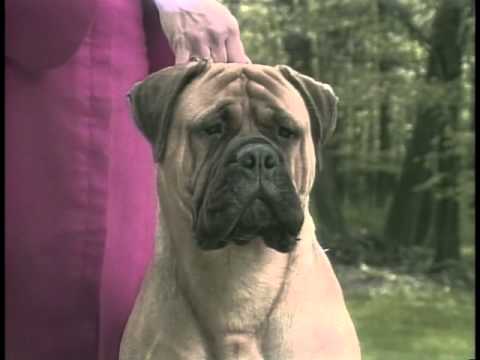 Bullmastiff — Official AKC Breed VideoAmerican Kennel Club
Watch the official AKC video covering temperament, history, traits, and care.
Watch on YouTube →Product Recommendations for Bullmastiffs
See all →Vet-reviewed picks for food, insurance, crates, brushes, treats, and toys — matched to this breed.
Compare Bullmastiff with Similar Breeds
See how the Bullmastiff stacks up against other breeds side by side.