
Dogo Argentino
Temperament
About the Dogo Argentino
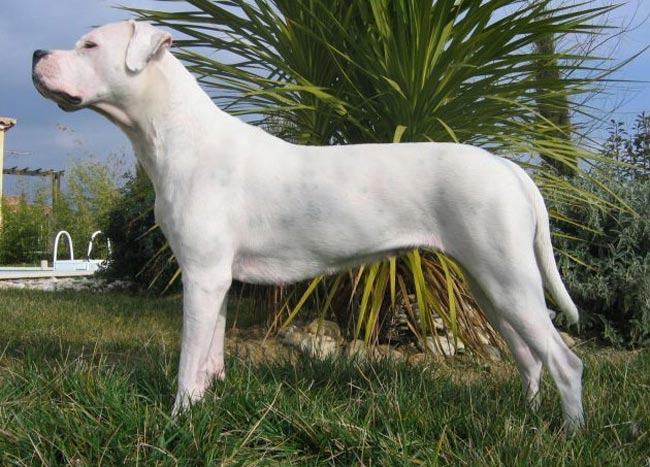
The Dogo Argentino is the product of one man's extraordinarily deliberate vision. In the 1920s, Dr. Antonio Nores Martinez, a physician and passionate hunter from Córdoba, Argentina, set out to create a big-game hunting dog capable of tracking and holding pumas, wild boar, and peccaries across the varied terrain of the Argentine pampas, mountains, and forests. He began with the Córdoba Fighting Dog — a now-extinct, highly aggressive local breed — as his foundation stock, then systematically crossbred it with ten other breeds over multiple generations, including the Great Dane for size, the Boxer for agility and temperament, the Bull Terrier for tenacity, the Bulldog for jaw strength, the Spanish Mastiff for power, the Great Pyrenees for the white coat, the Pointer for scenting ability, the Irish Wolfhound for prey drive, the Dogue de Bordeaux for musculature, and the Weimar for hunting instinct. What he produced by the 1940s was a dog built like a sprinter wearing armor — lean but massively muscled, with an all-white short coat and a head that communicates absolute confidence.
Dr. Martinez's work was cut tragically short when he was killed in 1956, but his brother Agustín Nores Martinez continued refining and promoting the breed internationally. The Dogo Argentino was officially recognized by the Fédération Cynologique Internationale (FCI) in 1973, making it the first and only Argentine breed to achieve FCI recognition. In the United States, the Dogo Argentino Club of America (DACA) serves as the parent club, and the American Kennel Club formally recognized the breed in 2020, placing it in the Working Group. Prior to full AKC recognition, the breed was in the AKC's Foundation Stock Service for years as its numbers in North America grew steadily.
What distinguishes the Dogo from related mastiff-type breeds is the combination of its function and its coat. Unlike the Cane Corso or the Rottweiler, the Dogo was never a guardian or drover — it was purpose-built for active, cooperative pack hunting, which required not aggression toward humans or its hunting partners, but rather drive, endurance, and biddability in the field. The all-white coat was intentional, making the dog easier to spot in dense brush and reducing the chance of being mistaken for prey during a hunt. The Dogo is also notably more athletic and less heavy-boned than European mastiff breeds, carrying its 80 to 100 pounds on a frame built for speed and sustained effort rather than static intimidation.
At a Glance
Quick Facts
- Breed Group:
- Working
- Bred For:
- Big-game hunting
- Origin:
- Argentina
- Life Span:
- 10 - 12 years
- Weight:
- 80 - 100 lbs
- Height:
- 23.5 - 27 in
💰 Dogo Argentino Cost Guide
Food · Vet · Grooming · Insurance · Full breakdown
Frequently Asked Questions
What is the temperament of a Dogo Argentino?
Dogo Argentinos are known to be friendly, affectionate, cheerful, loyal, tolerant, protective, brave, curious, playful, independent, gentle. This combination of traits makes them excellent companions for families with children. Their temperament is influenced by both genetics and proper socialization from an early age.
How much exercise does a Dogo Argentino need?
Dogo Argentinos are high-energy dogs requiring 60+ minutes of vigorous daily exercise and mental stimulation.
How often should I groom my Dogo Argentino?
Dogo Argentinos require intensive grooming with daily brushing and regular professional grooming sessions.
How do I train a Dogo Argentino?
Dogo Argentinos are highly trainable and typically respond well to positive reinforcement methods.
Are Dogo Argentinos good with children?
Dogo Argentinos are excellent with children. Their natural patience, gentle nature, and resilience make them outstanding family dogs. They typically form strong bonds with children and tend to be forgiving of the occasional accidental rough handling that can occur with younger kids. Remember that proper socialization and teaching children appropriate interaction with dogs are always important, regardless of breed.
What makes the Dogo Argentino unique compared to other dog breeds?
The Dogo Argentino stands out from other breeds due to its rich heritage from Argentina, exceptional hunting abilities. This unique combination of characteristics makes them special among dog breeds and appeals to owners who appreciate these distinct qualities. Understanding these traits helps provide appropriate care tailored to their specific needs.
What should I know before getting a Dogo Argentino?
Before bringing a Dogo Argentino into your home, potential owners should consider: They have high exercise requirements (5/5) and need an active owner. Their coat requires significant maintenance (4/5) with regular grooming sessions. They typically excel in family environments with children (5/5 child-friendliness). They're typically highly trainable (4/5) and eager to learn. Their large size requires adequate living space. They may be prone to breed-specific health issues including Hip Dysplasia, Deafness (white pigment), Skin Allergies, Hypothyroidism, Glaucoma. Additionally, researching reputable breeders or rescue organizations is essential for finding a healthy, well-socialized Dogo Argentino. Understanding these factors will help ensure a good match between the breed and your lifestyle, leading to a happy relationship for both you and your dog.
What were Dogo Argentinos originally bred for?
Dogo Argentinos were originally bred for big-game hunting. This hunting background explains their natural prey drive, scenting abilities, and often high energy levels. As part of the Working group, they share characteristics with other breeds developed for similar purposes. Understanding your Dogo Argentino's breeding heritage helps explain many of their natural behaviors and instincts, which can be channeled appropriately through training and enrichment activities. Even though modern Dogo Argentinos are primarily companions, these inherent traits remain part of their genetic makeup.
How long do Dogo Argentinos typically live?
The average lifespan of a Dogo Argentino is 10 - 12 years. With proper care including quality nutrition, regular veterinary check-ups, appropriate exercise, and preventative healthcare, some Dogo Argentinos may live beyond this range. Genetics, environment, and healthcare all play important roles in determining longevity.
Are Dogo Argentinos good family dogs?
Dogo Argentinos can be excellent family dogs in the right household, but the pairing requires honest assessment. With proper socialization from puppyhood and consistent training, Dogos are genuinely affectionate, tolerant, and gentle with the children they are raised alongside. They are not naturally indifferent dogs — they form deep attachments to their families and are known to be patient and playful with kids in the home. The caveats are real, though: their size and strength mean toddler-aged children can be knocked over during exuberant moments, their prey drive can make them unreliable around small family pets like cats or rabbits, and they require an adult in the household with the experience and time to train and socialize them properly. A Dogo raised in a chaotic household without structure or socialization is a different animal than one raised with clear boundaries and regular exposure to the world. For active families with older children, no small prey animals, and the commitment to invest in training, the Dogo can be a deeply loyal and rewarding family companion.
Why is the Dogo Argentino banned in some countries?
The Dogo Argentino is banned or restricted in several countries — including the United Kingdom, Australia, New Zealand, Denmark, Norway, and Iceland — under breed-specific legislation (BSL) that classifies it as a dangerous breed. In the UK, the Dogo was added to the list of prohibited breeds under the Dangerous Dogs Act 1991, alongside the Pit Bull Terrier, Japanese Tosa, and Fila Brasileiro. These bans are controversial among breed advocates and many veterinary behaviorists, who argue that BSL addresses appearance rather than individual temperament and has limited effectiveness at reducing dog bites at a population level. The Dogo's inclusion on these lists stems largely from its association with illegal dogfighting rings and its use as an intimidation or status breed in some contexts, rather than from systematic evidence that well-bred, well-socialized Dogos present an unusual public safety risk. In the United States, breed-specific restrictions vary by municipality and insurance carrier rather than federal or state law, and the breed is legally owned in most jurisdictions with no restrictions beyond standard leash laws.
Do Dogo Argentinos get along with other dogs?
Dogo Argentino compatibility with other dogs is one of the most important and honest conversations a prospective owner needs to have. The breed was developed for cooperative pack hunting, which means Dogos can and do live successfully with other dogs — but same-sex aggression, particularly between two males or two females, is common enough in the breed that it should be treated as a likely scenario rather than an exception. Many experienced Dogo owners maintain opposite-sex pairings when keeping multiple dogs, and even then, careful management and supervision remain important. With unfamiliar dogs, especially those that are reactive or dominant, a Dogo's response can escalate quickly, and their physical capability means that escalation is dangerous. Early, broad socialization with dogs of varying sizes, ages, and temperaments — starting in puppyhood — dramatically improves outcomes, but it does not eliminate the underlying predisposition. Households adopting a Dogo alongside a resident dog should arrange careful, neutral-territory introductions and be prepared to manage the relationship long-term rather than assuming compatibility will simply develop over time.
Additional Characteristics
Care Requirements
They are extremely energetic dogs requiring extensive daily exercise, activities, and mental stimulation.
They have high grooming needs requiring frequent brushing and regular professional grooming.
Highly trainable — quick to learn and eager to please
They are excellent with children and often form strong bonds with them.
Dogo Argentino
Complete Breed Guide
About the Dogo Argentino
The Dogo Argentino is a breed developed in Argentina in the 1920s for big-game hunting, particularly for wild boar. This muscular and athletic dog typically weighs between 80 to 100 pounds and stands 23.5 to 27 inches tall. Known for their friendly and loyal temperament, Dogo Argentinos are protective family companions, displaying intelligence and playfulness while also requiring consistent training and socialization.
Dogo Argentinos are known for being friendly, affectionate, cheerful, loyal, tolerant, and protective, brave, curious. As a high-energy breed, they are highly responsive to training and thrive with regular mental and physical activity. They are excellent with children of all ages and friendly with other dogs, making them a popular choice for families and experienced dog owners alike.
Caring for a Dogo Argentino means committing to regular grooming (brushing several times a week), intense daily exercise, and firm, consistent training. Their gentle, social nature makes them a wonderful addition to active families.
At a Glance
Quick Facts
- Breed Group:
- Working
- Bred For:
- Big-game hunting
- Origin:
- Argentina
- Life Span:
- 10 - 12 years
- Weight:
- 80 - 100 lbs
- Height:
- 23.5 - 27 in
Temperament
Free Dogo Argentino Health Guide
Dogo Argentinos can be prone to Hip Dysplasia and other conditions. Get our owner's health checklist and monthly vet tips — free.
- ✓Dogo Argentino-specific health warning signs
- ✓Vet visit checklist & cost tracker
- ✓Monthly breed health newsletter
Finding similar breeds...
How We Find Similar Breeds
We analyze breed characteristics including temperament, size, appearance, and care needs to identify the most similar dog breeds. This helps you discover alternatives that might be a good match for your lifestyle and preferences.
Explore Related Breeds & Guides
Adopt a Dogo Argentino
Filter to show only purebred Dogo Argentinos (excludes mixed breeds and crosses)
Find Dogs Near You
Enter your location to discover adoptable pets nearby
How to Adopt a Dogo Argentino
Follow these steps to ensure a smooth and responsible adoption process. Remember that adopting a dog is a lifelong commitment.
Research the Breed
Learn everything you can about Dogo Argentinos, including their temperament, exercise needs, grooming requirements, and potential health issues.
Find Reputable Sources
Look for adoptable dogs through shelters, rescue organizations, or responsible breeders. Avoid puppy mills and online scams.
Apply for Adoption
Complete an adoption application with your chosen organization. Be prepared to provide references and possibly go through a home visit.
Meet Your Potential Pet
Schedule a meeting with the dog to assess compatibility with you, your family, and any existing pets.
Prepare Your Home
Gather necessary supplies and dog-proof your home before bringing your new pet home.
1Essential Supplies
Food and water bowls, high-quality dog food, collar with ID tag, leash, bed, crate, toys, treats, grooming supplies, and cleaning products for accidents.
2Create a Safe Space
Designate an area where your dog can retreat when feeling overwhelmed. This could be a crate with comfortable bedding or a quiet corner with their bed.
3Remove Hazards
Secure or remove toxic plants, chemicals, small objects that could be swallowed, and foods that are harmful to dogs. Use baby gates if needed to restrict access to certain areas.
4Find a Veterinarian
Research and choose a veterinarian before bringing your dog home, and schedule an initial check-up shortly after adoption.
What is the dog's background and history?
Understanding a dog's past can help you anticipate potential behavior issues and provide appropriate support.
Has the dog been spayed/neutered and vaccinated?
This information is important for planning future veterinary care and understanding any immediate medical needs.
What is the dog's energy level and exercise needs?
Dogo Argentinos typically need regular exercise to stay healthy and happy. Ask about specific exercise requirements.
Has the dog been socialized with other animals and people?
This helps you understand how the dog might interact with your family, friends, and other pets.
Are there any known behavioral or health issues?
Knowing about existing issues helps you prepare for any special care or training needs.
Special Considerations for Dogo Argentinos
- Dogo Argentinos may have specific health concerns that require regular monitoring.
- Consider how the typical Dogo Argentino temperament aligns with your lifestyle.
- Research the grooming needs of Dogo Argentinos to ensure you can commit to the required maintenance.
- Understand the exercise requirements of Dogo Argentinos to keep them healthy and prevent behavior problems.
- Learn about proper training methods that work well with Dogo Argentinos.
Product Recommendations for Dogo Argentinos
See all →Vet-reviewed picks for food, insurance, crates, brushes, treats, and toys — matched to this breed.
Compare Dogo Argentino with Similar Breeds
See how the Dogo Argentino stacks up against other breeds side by side.