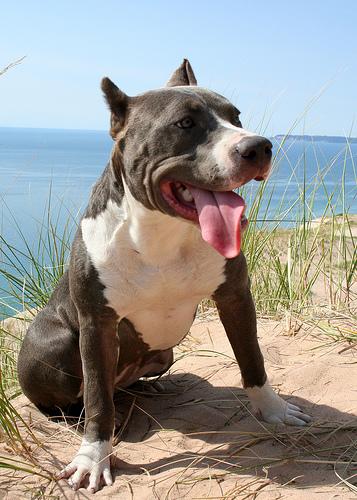
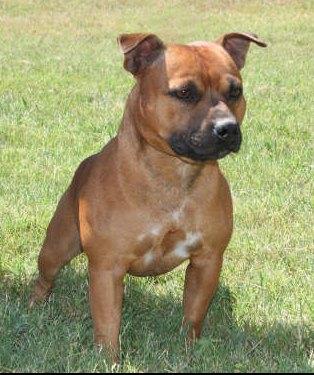
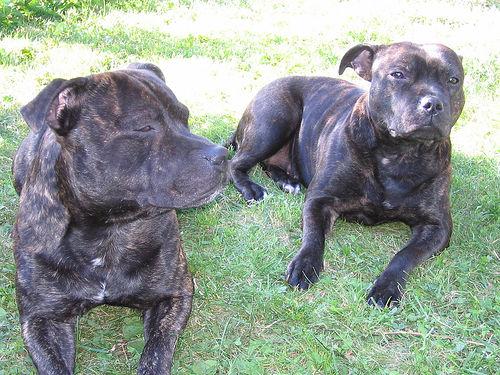

American Staffordshire Terrier
Temperament
About the American Staffordshire Terrier
The American Staffordshire Terrier's roots trace back to early nineteenth-century England, where breeders crossed the Old English Bulldog with various terrier types to produce a dog that combined the Bulldog's tenacity and physical power with the terrier's agility and sharp instincts. These crosses were used in the brutal blood sports of bull-baiting and dog fighting that were common in Britain at the time. When the practice of dog fighting was outlawed in England in 1835 under the Cruelty to Animals Act, many of these dogs made their way to the United States with immigrant workers, particularly those settling in the industrial regions of the Midwest and South.
Once in America, breeders began selecting for a larger, heavier dog than the Staffordshire Bull Terrier that had remained popular in England. American fanciers wanted a working dog with more physical presence, and through deliberate selective breeding over several decades, a distinctly American type began to emerge. By the late 1800s, these dogs were being called by various names — Bull-and-Terrier Dog, Half and Half, and Pit Dog among them — before the United Kennel Club formally recognized the American Pit Bull Terrier in 1898 under the stewardship of founder C. Z. Bennett.
The American Kennel Club took a different path. Wary of the fighting connotations attached to the Pit Bull name, the AKC recognized the breed in 1936 under the name Staffordshire Terrier, distinguishing it as a show and companion dog separate from the dogs being registered for working and performance purposes with the UKC. In 1972, the AKC renamed the breed the American Staffordshire Terrier to formally differentiate it from the Staffordshire Bull Terrier of Great Britain, which had been separately recognized by the AKC in 1974. The Staffordshire Bull Terrier is noticeably smaller — typically 24 to 38 pounds — making the size distinction between the two breeds significant and easy to observe side by side.
Today the breed is overseen in the United States by the Staffordshire Terrier Club of America, founded in 1936 and the parent club recognized by the AKC. The AmStaff ranks 77th out of 205 recognized AKC breeds in popularity. Notably, the UKC does not recognize the American Staffordshire Terrier as a separate breed and instead allows AmStaffs to be dual-registered as American Pit Bull Terriers — a policy that reflects the ongoing debate among enthusiasts about whether these represent truly distinct breeds or simply divergent registry lines of the same foundational stock. What sets the AmStaff apart physically is its stockier, more compact build, broader skull, and heavier bone structure compared to the American Pit Bull Terrier, which tends toward a slightly leaner, more athletic frame.
At a Glance
Quick Facts
- Breed Group:
- Terrier
- Origin:
- United States
- Life Span:
- 12 - 15 years
- Weight:
- 50 - 60 lbs
- Height:
- 17 - 19 in
💰 American Staffordshire Terrier Cost Guide
Food · Vet · Grooming · Insurance · Full breakdown
Apartment Living & Barking Behavior
Moderate apartment suitability: American Staffordshire Terriers can adapt to apartment living with proper exercise and mental stimulation.
- Requires 60-90 minutes of daily exercise
- Needs consistent training to manage energy indoors
- Benefits from having a routine and structured environment
- May need extra socialization in close-quarter living situations
Moderate barkers: ASTs typically bark when necessary but are not excessive barkers when properly trained.
Common Barking Triggers:
- Protective instincts (strangers approaching)
- Territorial behavior (other dogs nearby)
- Alerting to unusual sounds
- Boredom or lack of exercise
Bark Training Tips:
- Early socialization reduces defensive barking
- Consistent "quiet" command training
- Mental stimulation prevents boredom barking
- Positive reinforcement for calm behavior
Quick Apartment Assessment:
✓ Yes, if: You can provide daily exercise, consistent training, and mental stimulation
⚠ Consider carefully if: You have noise restrictions or limited time for exercise and training
Frequently Asked Questions
What is the temperament of a American Staffordshire Terrier?
American Staffordshire Terriers are known to be tenacious, friendly, devoted, loyal, attentive, courageous, affectionate, curious, brave, dignified, independent, playful. This combination of traits makes them excellent companions for families with children. Their temperament is influenced by both genetics and proper socialization from an early age.
How much exercise does a American Staffordshire Terrier need?
American Staffordshire Terriers have moderate energy levels and need 30-60 minutes of daily exercise including walks and playtime.
How often should I groom my American Staffordshire Terrier?
American Staffordshire Terriers require intensive grooming with daily brushing and regular professional grooming sessions.
How do I train a American Staffordshire Terrier?
American Staffordshire Terriers are highly trainable and typically respond well to positive reinforcement methods.
Are American Staffordshire Terriers good with children?
American Staffordshire Terriers are excellent with children. Their natural patience, gentle nature, and resilience make them outstanding family dogs. They typically form strong bonds with children and tend to be forgiving of the occasional accidental rough handling that can occur with younger kids. Remember that proper socialization and teaching children appropriate interaction with dogs are always important, regardless of breed.
What makes the American Staffordshire Terrier unique compared to other dog breeds?
The American Staffordshire Terrier stands out from other breeds due to its dignified appearance and bearing, rich heritage from United States. This unique combination of characteristics makes them special among dog breeds and appeals to owners who appreciate these distinct qualities. Understanding these traits helps provide appropriate care tailored to their specific needs.
What should I know before getting a American Staffordshire Terrier?
Before bringing a American Staffordshire Terrier into your home, potential owners should consider: Their coat requires significant maintenance (5/5) with regular grooming sessions. They typically excel in family environments with children (5/5 child-friendliness). They're typically highly trainable (4/5) and eager to learn. They may be prone to breed-specific health issues including Hip Dysplasia, Elbow Dysplasia, Skin Allergies, Hypothyroidism, Heart Disease, Cerebellar Ataxia. Additionally, researching reputable breeders or rescue organizations is essential for finding a healthy, well-socialized American Staffordshire Terrier. Understanding these factors will help ensure a good match between the breed and your lifestyle, leading to a happy relationship for both you and your dog.
What were American Staffordshire Terriers originally bred for?
As part of the Terrier group, they share characteristics with other breeds developed for similar purposes. Understanding your American Staffordshire Terrier's breeding heritage helps explain many of their natural behaviors and instincts, which can be channeled appropriately through training and enrichment activities. Even though modern American Staffordshire Terriers are primarily companions, these inherent traits remain part of their genetic makeup.
How long do American Staffordshire Terriers typically live?
The average lifespan of a American Staffordshire Terrier is 12 - 15 years. With proper care including quality nutrition, regular veterinary check-ups, appropriate exercise, and preventative healthcare, some American Staffordshire Terriers may live beyond this range. Genetics, environment, and healthcare all play important roles in determining longevity.
Is an American Staffordshire Terrier the same as a pit bull?
The American Staffordshire Terrier and the American Pit Bull Terrier share the same foundational breeding stock and are nearly identical in temperament, size, and appearance, but they have been maintained as separate registry lines for nearly a century. The AKC recognized the AmStaff in 1936 as a distinct breed oriented toward conformation showing, while the UKC has long registered the American Pit Bull Terrier as a working and performance breed. The UKC actually allows AmStaffs to be dual-registered as APBTs, reflecting how closely related the two are. In practical terms, the AmStaff tends toward a slightly stockier build, and breed-specific legislation in some municipalities may affect both dogs equally regardless of registry papers — something owners should research carefully before relocating.
Are American Staffordshire Terriers good with kids?
AmStaffs have a long-standing reputation as affectionate and patient with children in their own family, and historically dogs of this type were called 'nanny dogs' — though that label is considered an oversimplification by modern behaviorists. A well-socialized, responsibly bred AmStaff is typically gentle and playful with children and often seeks out physical closeness with family members. The more practical consideration is the breed's size and physical exuberance — a 60-pound dog playing enthusiastically can knock over a small child without any aggressive intent whatsoever. Supervision between any large dog and young children is standard practice regardless of breed, and teaching children how to interact respectfully with dogs is equally important.
Do American Staffordshire Terriers get along with other dogs?
Dog-to-dog compatibility is the most honest conversation to have with prospective AmStaff owners. The breed carries a genetic tendency toward dog selectivity — particularly same-sex dog aggression — rooted in its historical development for dog fighting. This does not mean every AmStaff will be aggressive toward other dogs; many live peacefully in multi-dog households. However, the probability of some level of dog selectivity is higher in this breed than in many others, and owners should not assume compatibility. Early socialization, proper introductions, and reading individual body language carefully are essential. Many AmStaffs do best as the only dog in the home, or with a dog of the opposite sex. Breed-specific rescues typically assess dog-to-dog behavior rigorously before placement.
How much exercise does an American Staffordshire Terrier need?
AmStaffs are medium-energy dogs that require consistent daily exercise but are not the relentlessly high-drive athletes that some working breeds demand. In practical terms, most AmStaffs do well with 45 to 90 minutes of physical activity per day — this can be a combination of leash walks, off-leash play in a securely fenced yard, fetch, or structured activities like agility and weight pull. The breed also has a notable capacity for lounging and will happily spend hours on a couch between activity sessions, which makes them more manageable than their muscular build might suggest. Mental stimulation through training sessions, puzzle feeders, and scent work is equally important — an AmStaff that is physically tired but mentally bored will find its own entertainment, which is rarely what owners prefer.
Do American Staffordshire Terriers bark a lot?
American Staffordshire Terriers are generally moderate barkers with a barking tendency rated 3/5. They have moderate barking tendencies and can be trained to bark less with consistent training and proper exercise. Early socialization helps manage their vocal behavior. ASTs typically bark when they sense a threat to their family or territory, but they're not constant barkers like some breeds. Their protective instincts may trigger barking at strangers or other dogs, but this can be managed through proper socialization and training from an early age.
How to stop American Staffordshire Terrier barking?
To reduce excessive barking in American Staffordshire Terriers: 1) Identify triggers (doorbell, strangers, boredom), 2) Use positive reinforcement when they're quiet, 3) Provide adequate exercise and mental stimulation, 4) Teach the "quiet" command, 5) Address underlying anxiety or territorial behavior. American Staffordshire Terriers are highly trainable and typically respond well to consistent training methods. For ASTs specifically: Start training early (8-16 weeks), use their food motivation for training rewards, practice the "quiet" command daily, expose them to various sounds and people during socialization, and ensure they get 60-90 minutes of exercise daily to prevent boredom-induced barking. Their intelligence and eagerness to please make them very responsive to consistent training methods.
Are American Staffordshire Terriers good for apartment living?
American Staffordshire Terriers are moderately suitable for apartment living with a suitability rating of 3/5. They can adapt to apartment living with proper exercise, mental stimulation, and training. Daily walks and play sessions are essential for their wellbeing in smaller spaces. ASTs need at least 60-90 minutes of daily exercise, including walks, play sessions, and mental challenges. In apartments, they benefit from puzzle toys, training sessions, and structured routines. Their moderate size (50-60 lbs) and calm indoor demeanor make them manageable in apartments, but they do require an active owner committed to meeting their exercise needs. Key factors for apartment success include regular exercise, noise management training, and proper socialization.
American Staffordshire Terrier apartment barking problems?
American Staffordshire Terriers in apartments may bark due to: 1) Territorial behavior toward neighbors and sounds, 2) Boredom from insufficient exercise, 3) Separation anxiety, 4) Lack of mental stimulation. Solutions include soundproofing training, establishing quiet times, providing puzzle toys, ensuring adequate exercise before leaving, and gradual desensitization to apartment noises. Fortunately, American Staffordshire Terriers are generally not excessive barkers, making apartment training more manageable. ASTs in apartments often bark at specific triggers: other dogs in hallways, delivery persons, or unfamiliar sounds from neighboring units. Create a "quiet zone" away from windows/doors, use white noise to mask external sounds, practice "place" training so they have a designated calm spot, and establish a pre-departure routine to prevent separation-related barking. Most AST apartment barking issues resolve within 2-3 months of consistent training.
How much exercise does a American Staffordshire Terrier need daily?
American Staffordshire Terriers need 45-60 minutes of moderate exercise daily, including walks, playtime, and mental stimulation. Regular exercise helps maintain their physical health and mental wellbeing. Mental stimulation through training and puzzle toys is equally important for preventing boredom-related behaviors.
What are common behavioral issues in American Staffordshire Terriers?
Common behavioral issues in American Staffordshire Terriers may include: excessive barking, separation anxiety, territorial behavior, and socialization challenges. Their protective nature requires proper socialization to prevent overguarding. Most issues can be addressed through consistent positive reinforcement training, adequate exercise, and mental stimulation.
Additional Characteristics
Care Requirements
They have a moderate energy level and benefit from daily walks and play sessions.
They have very high maintenance coats requiring daily brushing and regular professional grooming.
Highly trainable — quick to learn and eager to please
They are excellent with children and often form strong bonds with them.
American Staffordshire Terrier
Complete Breed Guide
About the American Staffordshire Terrier
The American Staffordshire Terrier, originating in the United States, was developed from bulldog and terrier breeds for various roles, including companionship and farm work. This breed typically weighs between 50 to 60 pounds and stands 17 to 19 inches tall, characterized by a muscular build and a short coat. Known for their tenacious and loyal temperament, they are affectionate with families and can be both playful and courageous, making them suitable as both companions and working dogs.
American Staffordshire Terriers are known for being tenacious, friendly, devoted, loyal, attentive, and courageous, affectionate, curious. As a moderately energetic breed, they are highly responsive to training and thrive with regular mental and physical activity. They are excellent with children of all ages and friendly with other dogs, making them a popular choice for families and experienced dog owners alike.
Caring for a American Staffordshire Terrier means committing to regular grooming (brushing several times a week), regular daily walks, and positive-reinforcement training. Their gentle, social nature makes them a wonderful addition to active families.
At a Glance
Quick Facts
- Breed Group:
- Terrier
- Origin:
- United States
- Life Span:
- 12 - 15 years
- Weight:
- 50 - 60 lbs
- Height:
- 17 - 19 in
Temperament
Free American Staffordshire Terrier Health Guide
American Staffordshire Terriers can be prone to Hip Dysplasia and other conditions. Get our owner's health checklist and monthly vet tips — free.
- ✓American Staffordshire Terrier-specific health warning signs
- ✓Vet visit checklist & cost tracker
- ✓Monthly breed health newsletter
Finding similar breeds...
How We Find Similar Breeds
We analyze breed characteristics including temperament, size, appearance, and care needs to identify the most similar dog breeds. This helps you discover alternatives that might be a good match for your lifestyle and preferences.
Explore Related Breeds & Guides
Adopt a American Staffordshire Terrier
Filter to show only purebred American Staffordshire Terriers (excludes mixed breeds and crosses)
Find Dogs Near You
Enter your location to discover adoptable pets nearby
How to Adopt a American Staffordshire Terrier
Follow these steps to ensure a smooth and responsible adoption process. Remember that adopting a dog is a lifelong commitment.
Research the Breed
Learn everything you can about American Staffordshire Terriers, including their temperament, exercise needs, grooming requirements, and potential health issues.
Find Reputable Sources
Look for adoptable dogs through shelters, rescue organizations, or responsible breeders. Avoid puppy mills and online scams.
Apply for Adoption
Complete an adoption application with your chosen organization. Be prepared to provide references and possibly go through a home visit.
Meet Your Potential Pet
Schedule a meeting with the dog to assess compatibility with you, your family, and any existing pets.
Prepare Your Home
Gather necessary supplies and dog-proof your home before bringing your new pet home.
1Essential Supplies
Food and water bowls, high-quality dog food, collar with ID tag, leash, bed, crate, toys, treats, grooming supplies, and cleaning products for accidents.
2Create a Safe Space
Designate an area where your dog can retreat when feeling overwhelmed. This could be a crate with comfortable bedding or a quiet corner with their bed.
3Remove Hazards
Secure or remove toxic plants, chemicals, small objects that could be swallowed, and foods that are harmful to dogs. Use baby gates if needed to restrict access to certain areas.
4Find a Veterinarian
Research and choose a veterinarian before bringing your dog home, and schedule an initial check-up shortly after adoption.
What is the dog's background and history?
Understanding a dog's past can help you anticipate potential behavior issues and provide appropriate support.
Has the dog been spayed/neutered and vaccinated?
This information is important for planning future veterinary care and understanding any immediate medical needs.
What is the dog's energy level and exercise needs?
American Staffordshire Terriers typically need regular exercise to stay healthy and happy. Ask about specific exercise requirements.
Has the dog been socialized with other animals and people?
This helps you understand how the dog might interact with your family, friends, and other pets.
Are there any known behavioral or health issues?
Knowing about existing issues helps you prepare for any special care or training needs.
Special Considerations for American Staffordshire Terriers
- American Staffordshire Terriers may have specific health concerns that require regular monitoring.
- Consider how the typical American Staffordshire Terrier temperament aligns with your lifestyle.
- Research the grooming needs of American Staffordshire Terriers to ensure you can commit to the required maintenance.
- Understand the exercise requirements of American Staffordshire Terriers to keep them healthy and prevent behavior problems.
- Learn about proper training methods that work well with American Staffordshire Terriers.
Product Recommendations for American Staffordshire Terriers
See all →Vet-reviewed picks for food, insurance, crates, brushes, treats, and toys — matched to this breed.
Compare American Staffordshire Terrier with Similar Breeds
See how the American Staffordshire Terrier stacks up against other breeds side by side.