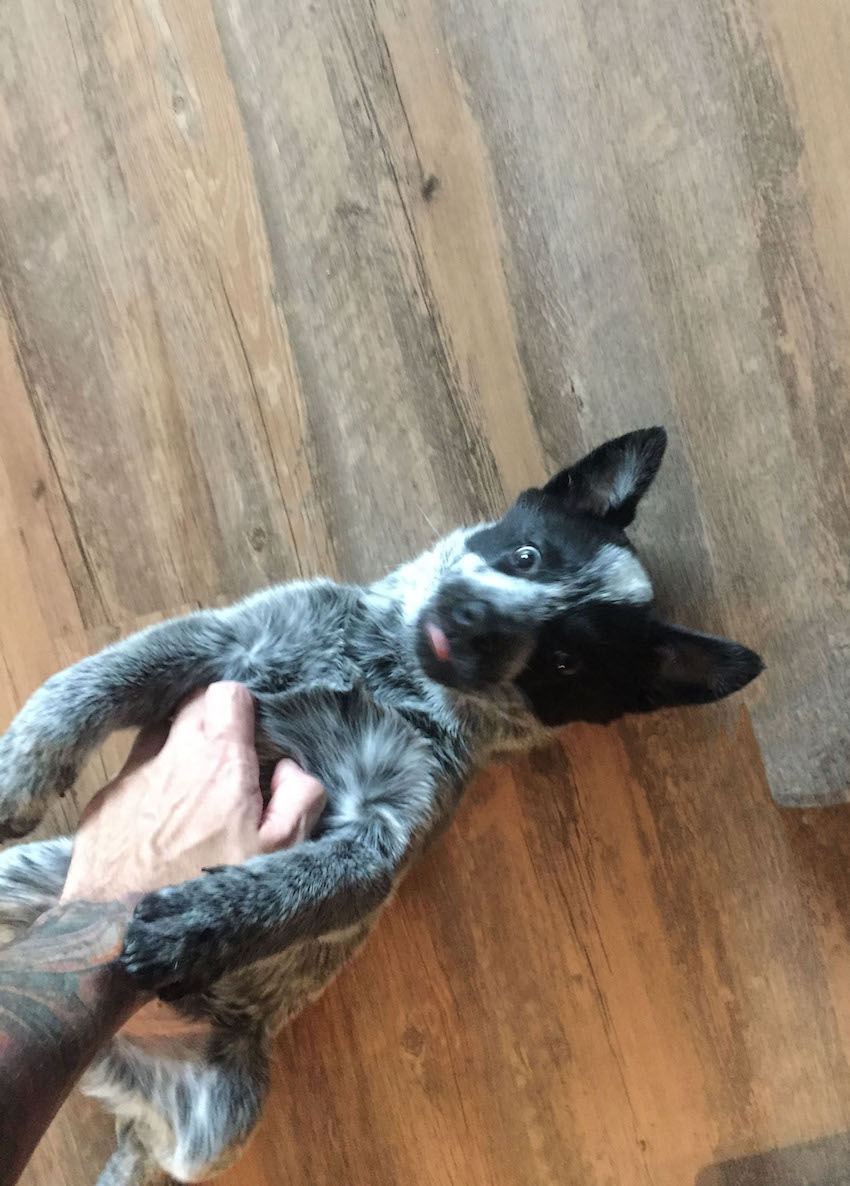
Australian Cattle Dog
Temperament
About the Australian Cattle Dog
The Australian Cattle Dog's origin is one of the more deliberate and well-documented breed development stories in canine history. In the 1840s, a New South Wales cattle farmer named Thomas Hall crossed imported Northumberland Blue Merle drovers' dogs with tamed dingoes, producing what became known as Hall's Heelers. These dogs were kept within the Hall family until Thomas's death in 1870, after which they became more widely available to other breeders and stockmen across the continent. The breed's foundation was built entirely on function — the vast, unforgiving Australian outback demanded a dog that could work cattle over distances that would break most European breeds, enduring heat, rough terrain, and the psychological pressure of controlling animals far more stubborn than sheep.
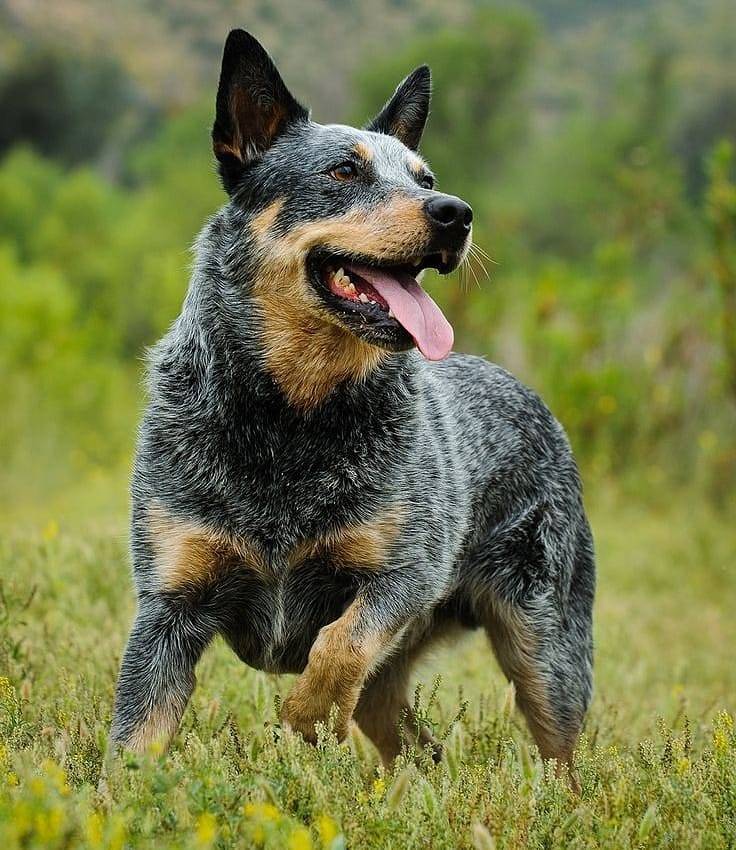
In the early twentieth century, additional bloodlines were introduced to refine both temperament and physical type. Dalmatian crosses were added specifically to strengthen the bond with horses and handlers, a trait the Dalmatian was already well-known for, while Australian Kelpie blood contributed herding instinct and stamina. Some breeders also introduced Bull Terrier lines, which are credited with adding the breed's characteristic tenacity and courage under pressure. The result was a compact, double-coated, dense-muscled dog that came in two color forms: red speckle and blue speckle, the latter caused by black hairs distributed through a white base coat.
The Australian Cattle Dog was recognized by the American Kennel Club in 1980 and is currently classified in the Herding Group, where it ranks 52nd in popularity out of 205 recognized breeds. In Australia, the breed is governed by the Australian National Kennel Council, and in the United States the Australian Cattle Dog Club of America serves as the AKC parent club, maintaining the breed standard and supporting health research initiatives.
What separates the Australian Cattle Dog from close relatives like the Australian Kelpie and Border Collie is primarily its method of herding and its physical build. Where Border Collies use a stalking, eye-based approach to control livestock, the Cattle Dog works by heeling — biting at the heels of cattle to move them — then ducking low to avoid a kick. This physical, contact-based style required a dog built differently: lower to the ground relative to body mass, broader in skull, and more physically resilient. The Kelpie is lighter and faster but lacks the Cattle Dog's raw durability. The dingo influence also gave this breed an independence and wariness of strangers that sets it apart from most other AKC herding breeds.
At a Glance
Quick Facts
- Breed Group:
- Herding
- Bred For:
- Cattle herding, herding trials
- Origin:
- Australia
- Life Span:
- 12 - 14 years
- Weight:
- 44 - 62 lbs
- Height:
- 17 - 20 in
💰 Australian Cattle Dog Cost Guide
Food · Vet · Grooming · Insurance · Full breakdown
Frequently Asked Questions
What is the temperament of a Australian Cattle Dog?
Australian Cattle Dogs are known to be cautious, energetic, loyal, obedient, protective, brave. This combination of traits makes them excellent watchdogs and devoted family protectors. Their temperament is influenced by both genetics and proper socialization from an early age.
How much exercise does a Australian Cattle Dog need?
Australian Cattle Dogs are high-energy dogs requiring 60+ minutes of vigorous daily exercise and mental stimulation.
How often should I groom my Australian Cattle Dog?
Australian Cattle Dogs require minimal grooming with weekly brushing and occasional baths.
How do I train a Australian Cattle Dog?
Australian Cattle Dogs are highly trainable and typically respond well to positive reinforcement methods.
Are Australian Cattle Dogs good with children?
Australian Cattle Dogs are excellent with children. Their natural patience, gentle nature, and resilience make them outstanding family dogs. They typically form strong bonds with children and tend to be forgiving of the occasional accidental rough handling that can occur with younger kids. Remember that proper socialization and teaching children appropriate interaction with dogs are always important, regardless of breed.
What makes the Australian Cattle Dog unique compared to other dog breeds?
The Australian Cattle Dog stands out from other breeds due to its rich heritage from Australia, specialized abilities for cattle herding, herding trials. This unique combination of characteristics makes them special among dog breeds and appeals to owners who appreciate these distinct qualities. Understanding these traits helps provide appropriate care tailored to their specific needs.
What should I know before getting a Australian Cattle Dog?
Before bringing a Australian Cattle Dog into your home, potential owners should consider: They have high exercise requirements (5/5) and need an active owner. Their coat is relatively low-maintenance (2/5). They typically excel in family environments with children (4/5 child-friendliness). They're typically highly trainable (4/5) and eager to learn. They may be prone to breed-specific health issues including Hip Dysplasia, Progressive Retinal Atrophy, Deafness, Lens Luxation, Osteochondrosis. Additionally, researching reputable breeders or rescue organizations is essential for finding a healthy, well-socialized Australian Cattle Dog. Understanding these factors will help ensure a good match between the breed and your lifestyle, leading to a happy relationship for both you and your dog.
What were Australian Cattle Dogs originally bred for?
Australian Cattle Dogs were originally bred for cattle herding, herding trials. This herding heritage explains their intelligence, focus, and sometimes tendency to herd family members, particularly children. As part of the Herding group, they share characteristics with other breeds developed for similar purposes. Understanding your Australian Cattle Dog's breeding heritage helps explain many of their natural behaviors and instincts, which can be channeled appropriately through training and enrichment activities. Even though modern Australian Cattle Dogs are primarily companions, these inherent traits remain part of their genetic makeup.
How long do Australian Cattle Dogs typically live?
The average lifespan of a Australian Cattle Dog is 12 - 14 years. With proper care including quality nutrition, regular veterinary check-ups, appropriate exercise, and preventative healthcare, some Australian Cattle Dogs may live beyond this range. Genetics, environment, and healthcare all play important roles in determining longevity.
Are Australian Cattle Dogs good family pets?
Australian Cattle Dogs can be excellent family companions, but they are not a low-effort breed. They form intense bonds with their immediate family and are loyal and protective by nature. The significant caveat for families is the breed's hardwired herding instinct — running children will almost always trigger nipping behavior, which is not aggression but is a genuine bite that must be managed through early training and redirection. Families with very young children should understand that this requires consistent supervision and early socialization. Families that are active outdoors, have space, and can provide daily structured exercise and mental engagement will find the Cattle Dog a devoted and capable companion. Sedentary households or those with very small children who are not ready to manage the breed's instincts are not the ideal placement.
How much exercise does an Australian Cattle Dog need every day?
An Australian Cattle Dog needs a minimum of 60 to 90 minutes of vigorous physical activity daily, and that figure assumes meaningful mental stimulation is also being provided. A long walk does not meet this breed's needs — the exercise needs to be intense enough to actually tire the dog. Running, hiking, fetch, agility training, and herding work all qualify. A Cattle Dog left in a yard with access to space but nothing to do will not exercise itself adequately; it will pace, dig, bark, or find creative destruction. Many owners in the working dog community describe this breed as requiring a second job for its owner. Dogs used in actual herding or dog sports like agility tend to be better settled than those relying on owner-managed exercise alone.
Do Australian Cattle Dogs bark a lot?
Australian Cattle Dogs are not excessive barkers by breed standard, but they are alert and protective, which means they will vocalize when something in their environment warrants attention in their assessment. A well-exercised, mentally stimulated Cattle Dog living in a structured household is generally not a nuisance barker. The problems arise when the dog is under-stimulated — boredom in this breed can express itself through repetitive barking, particularly when left alone or confined. Their wariness of strangers also means they will reliably alert to unfamiliar people approaching the home or property. Owners who live in close quarters with neighbors, such as apartments or dense urban areas, often find the combination of noise sensitivity and alert-barking more challenging to manage than those with more space.
What is the difference between a Blue Heeler and an Australian Cattle Dog?
There is no difference — they are the same dog. Blue Heeler is a common nickname for the Australian Cattle Dog that references two things simultaneously: the dog's method of herding by nipping at the heels of cattle, and the blue speckled coat coloring that results from black hairs distributed through a white base. Dogs with the same build and genetics but with red speckled coats are similarly called Red Heelers. Queensland Heeler is another regional nickname used in Australia, referring to the state of Queensland where the breed was widely used in droving operations. All three names — Blue Heeler, Red Heeler, and Queensland Heeler — describe the same AKC-recognized breed, the Australian Cattle Dog. In shelters and rescue listings, the Heeler names appear frequently and are worth using in searches to avoid missing available dogs.
Additional Characteristics
Care Requirements
They are extremely energetic dogs requiring extensive daily exercise, activities, and mental stimulation.
They need regular but basic grooming such as weekly brushing.
Highly trainable — quick to learn and eager to please
They are generally very good with children and tend to be patient and tolerant.
Australian Cattle Dog
Complete Breed Guide
About the Australian Cattle Dog
The Australian Cattle Dog, originating from Australia, was developed in the 19th century for herding cattle over long distances in harsh conditions. This breed typically weighs between 44 to 62 pounds and stands 17 to 20 inches tall, featuring a compact, muscular build with a short coat that can be blue or red speckled. Known for their loyalty and protective nature, Australian Cattle Dogs are energetic and obedient, making them excellent working dogs as well as devoted companions. Their lifespan ranges from 12 to 14 years.
Australian Cattle Dogs are known for being cautious, energetic, loyal, obedient, protective, and brave. As a high-energy breed, they are highly responsive to training and thrive with regular mental and physical activity. They are excellent with children of all ages and friendly with other dogs, making them a popular choice for families and experienced dog owners alike.
Caring for a Australian Cattle Dog means committing to minimal grooming — a quick brush once a week is usually enough, intense daily exercise, and firm, consistent training. Their gentle, social nature makes them a wonderful addition to active families.
At a Glance
Quick Facts
- Breed Group:
- Herding
- Bred For:
- Cattle herding, herding trials
- Origin:
- Australia
- Life Span:
- 12 - 14 years
- Weight:
- 44 - 62 lbs
- Height:
- 17 - 20 in
Temperament
Free Australian Cattle Dog Health Guide
Australian Cattle Dogs can be prone to Hip Dysplasia and other conditions. Get our owner's health checklist and monthly vet tips — free.
- ✓Australian Cattle Dog-specific health warning signs
- ✓Vet visit checklist & cost tracker
- ✓Monthly breed health newsletter
Finding similar breeds...
How We Find Similar Breeds
We analyze breed characteristics including temperament, size, appearance, and care needs to identify the most similar dog breeds. This helps you discover alternatives that might be a good match for your lifestyle and preferences.
Adopt a Australian Cattle Dog
Filter to show only purebred Australian Cattle Dogs (excludes mixed breeds and crosses)
Find Dogs Near You
Enter your location to discover adoptable pets nearby
How to Adopt a Australian Cattle Dog
Follow these steps to ensure a smooth and responsible adoption process. Remember that adopting a dog is a lifelong commitment.
Research the Breed
Learn everything you can about Australian Cattle Dogs, including their temperament, exercise needs, grooming requirements, and potential health issues.
Find Reputable Sources
Look for adoptable dogs through shelters, rescue organizations, or responsible breeders. Avoid puppy mills and online scams.
Apply for Adoption
Complete an adoption application with your chosen organization. Be prepared to provide references and possibly go through a home visit.
Meet Your Potential Pet
Schedule a meeting with the dog to assess compatibility with you, your family, and any existing pets.
Prepare Your Home
Gather necessary supplies and dog-proof your home before bringing your new pet home.
1Essential Supplies
Food and water bowls, high-quality dog food, collar with ID tag, leash, bed, crate, toys, treats, grooming supplies, and cleaning products for accidents.
2Create a Safe Space
Designate an area where your dog can retreat when feeling overwhelmed. This could be a crate with comfortable bedding or a quiet corner with their bed.
3Remove Hazards
Secure or remove toxic plants, chemicals, small objects that could be swallowed, and foods that are harmful to dogs. Use baby gates if needed to restrict access to certain areas.
4Find a Veterinarian
Research and choose a veterinarian before bringing your dog home, and schedule an initial check-up shortly after adoption.
What is the dog's background and history?
Understanding a dog's past can help you anticipate potential behavior issues and provide appropriate support.
Has the dog been spayed/neutered and vaccinated?
This information is important for planning future veterinary care and understanding any immediate medical needs.
What is the dog's energy level and exercise needs?
Australian Cattle Dogs typically need regular exercise to stay healthy and happy. Ask about specific exercise requirements.
Has the dog been socialized with other animals and people?
This helps you understand how the dog might interact with your family, friends, and other pets.
Are there any known behavioral or health issues?
Knowing about existing issues helps you prepare for any special care or training needs.
Special Considerations for Australian Cattle Dogs
- Australian Cattle Dogs may have specific health concerns that require regular monitoring.
- Consider how the typical Australian Cattle Dog temperament aligns with your lifestyle.
- Research the grooming needs of Australian Cattle Dogs to ensure you can commit to the required maintenance.
- Understand the exercise requirements of Australian Cattle Dogs to keep them healthy and prevent behavior problems.
- Learn about proper training methods that work well with Australian Cattle Dogs.
 Australian Cattle Dog — Official AKC Breed VideoAmerican Kennel Club
Watch the official AKC video covering temperament, history, traits, and care.
Watch on YouTube →Product Recommendations for Australian Cattle Dogs
See all →Vet-reviewed picks for food, insurance, crates, brushes, treats, and toys — matched to this breed.
Compare Australian Cattle Dog with Similar Breeds
See how the Australian Cattle Dog stacks up against other breeds side by side.