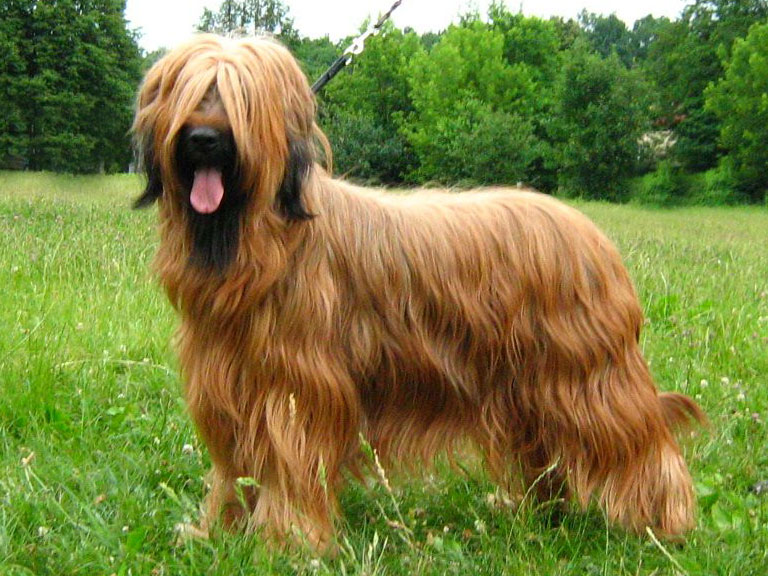
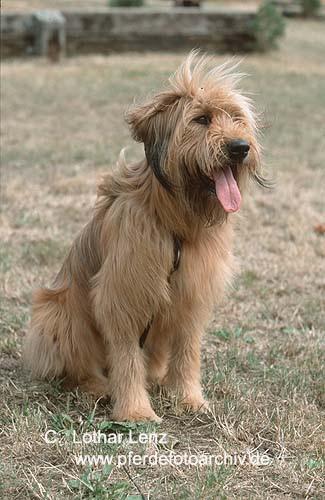



Briard
Temperament
About the Briard
The Briard, known in France as the Berger de Brie, carries more than a thousand years of French agricultural history in its shaggy, wavy coat. Dogs resembling the Briard appear in tapestries alongside Emperor Charlemagne dating to the 8th century, and by the 14th century, historical records make them more definitively identifiable as the breed we know today. The name Briard, officially adopted around 1809, almost certainly derives from the Brie region of northern France — the same territory that gave the world its famous soft-ripened cheese. This was working dog country, and the Briard was shaped entirely by that context: a dog that could both herd sheep across open terrain and defend the flock against wolves and thieves, a dual-purpose function that set it apart from strictly pastoral breeds.
The breed's documented show history begins at the first Paris dog show in 1863, and the first Briard registered in the Livre des Origines Françaises — France's national studbook — was a dog named Sans Gêne in 1885. By that point, notable figures had already been associated with the breed for decades. Thomas Jefferson, while serving as U.S. Ambassador to France, received a Briard as a gift and subsequently imported several to his Monticello estate in Virginia. The Marquis de Lafayette is also credited by some historians with introducing Briards to America, reportedly sending dogs to George Washington himself. Napoleon Bonaparte was said to have kept Briards as well, cementing the breed's long association with French cultural identity and power.
During both World Wars, the Briard served the French Army officially as a messenger dog, a supply carrier, and — most critically — as a search dog tasked with locating wounded soldiers on the battlefield. This wartime role demanded exactly the traits the breed had been selected for over centuries: fearlessness, intelligence, stamina, and an ability to work at a distance from the handler with real independence.
In the United States, the Briard Club of America serves as the AKC parent club for the breed, and the Briard has been fully recognized by the American Kennel Club within the Herding Group for decades. Despite this recognition, the breed remains relatively uncommon, ranking 145th out of 205 recognized breeds in AKC popularity data. What distinguishes the Briard most clearly from related French herding breeds — the Beauceron, Berger Picard, and Bouvier des Flandres — is the combination of its distinctive double dewclaws on the rear legs, which the breed standard requires, and its thick, slightly wavy outer coat that can reach considerable length. These features, together with its pronounced beard and eyebrows, give the Briard a silhouette unlike any other herding breed.
At a Glance
Quick Facts
- Breed Group:
- Herding
- Bred For:
- Herding, guarding sheep
- Origin:
- France
- Life Span:
- 10 - 12 years
- Weight:
- 70 - 90 lbs
- Height:
- 22 - 27 in
💰 Briard Cost Guide
Food · Vet · Grooming · Insurance · Full breakdown
Frequently Asked Questions
What is the temperament of a Briard?
Briards are known to be fearless, loyal, obedient, intelligent, faithful, protective. This combination of traits makes them excellent watchdogs and devoted family protectors. Their temperament is influenced by both genetics and proper socialization from an early age.
How much exercise does a Briard need?
Briards are high-energy dogs requiring 60+ minutes of vigorous daily exercise and mental stimulation.
How often should I groom my Briard?
Briards need moderate grooming including brushing 2-3 times weekly and regular maintenance.
How do I train a Briard?
Briards have moderate trainability and benefit from consistent, positive training approaches.
Are Briards good with children?
Briards are generally not recommended with children. They generally prefer calm, predictable environments and may become stressed by the unpredictable movements and loud sounds typical of young children. Households with older, respectful children may be more suitable. Remember that proper socialization and teaching children appropriate interaction with dogs are always important, regardless of breed.
What makes the Briard unique compared to other dog breeds?
The Briard stands out from other breeds due to its rich heritage from France, natural protective instincts. This unique combination of characteristics makes them special among dog breeds and appeals to owners who appreciate these distinct qualities. Understanding these traits helps provide appropriate care tailored to their specific needs.
What should I know before getting a Briard?
Before bringing a Briard into your home, potential owners should consider: They have high exercise requirements (4/5) and need an active owner. They may not be ideal for families with young children (2/5 child-friendliness). Their large size requires adequate living space. They may be prone to breed-specific health issues including Hip Dysplasia, Progressive Retinal Atrophy (Stationary Night Blindness), Bloat (GDV), Hypothyroidism. Additionally, researching reputable breeders or rescue organizations is essential for finding a healthy, well-socialized Briard. Understanding these factors will help ensure a good match between the breed and your lifestyle, leading to a happy relationship for both you and your dog.
What were Briards originally bred for?
Briards were originally bred for herding, guarding sheep. This herding heritage explains their intelligence, focus, and sometimes tendency to herd family members, particularly children. As part of the Herding group, they share characteristics with other breeds developed for similar purposes. Understanding your Briard's breeding heritage helps explain many of their natural behaviors and instincts, which can be channeled appropriately through training and enrichment activities. Even though modern Briards are primarily companions, these inherent traits remain part of their genetic makeup.
How long do Briards typically live?
The average lifespan of a Briard is 10 - 12 years. With proper care including quality nutrition, regular veterinary check-ups, appropriate exercise, and preventative healthcare, some Briards may live beyond this range. Genetics, environment, and healthcare all play important roles in determining longevity.
Are Briards good family dogs with kids?
Briards can be excellent family dogs, but the relationship works best when children are taught to respect the dog's space and when the Briard has been thoroughly socialized from puppyhood. The breed has a natural instinct to herd, which can manifest as circling or nudging small children — a behavior that is not aggression but can be startling. A well-raised Briard is deeply loyal to its family unit and will be protective of children in the household. That protectiveness, however, means the Briard may be wary of unfamiliar children or boisterous play between kids it doesn't know. Supervision during interactions with young children and early, positive exposure to the sounds and movements of kids are both important. Families with older children who can engage the dog in training and play tend to be the best fit.
How much exercise does a Briard need daily?
The Briard is a large working breed that was developed to cover significant ground daily while managing livestock, and its exercise needs reflect that history. Most adult Briards require a minimum of 60 to 90 minutes of meaningful physical activity each day — and 'meaningful' is the operative word. A slow walk around the block will not satisfy a healthy adult Briard. They do best with activities that engage both body and mind: off-leash running in a securely fenced area, hiking, structured play sessions, herding work, or participation in dog sports like agility or tracking. Insufficient exercise in this breed typically produces destructive behavior, excessive barking, and a restless quality that owners sometimes misread as a training problem when it is really an energy management problem.
Do Briards bark a lot?
Briards are vocal dogs by nature, and some individuals are more so than others. The breed was developed in part to alert shepherds to threats and to communicate with the flock, so a degree of barking is genuinely hardwired into the breed's function. Briards will typically bark to announce strangers at the door, alert to unusual sounds, and communicate with their family. What separates a well-adjusted Briard from a nuisance barker is training and socialization — a confident, socialized Briard that has been taught a reliable 'quiet' cue and that receives adequate exercise will bark appropriately and stop when the situation resolves. An under-exercised or anxious Briard living in a stimulating environment like a densely populated neighborhood will bark more persistently and is likely to become a problem for neighbors.
What is stationary night blindness in Briards?
Stationary Night Blindness, also called Congenital Stationary Night Blindness or CSNB, is a hereditary eye condition specific to the Briard breed caused by a mutation in the RPE65 gene. Unlike progressive forms of retinal atrophy that worsen over time, CSNB is non-progressive — affected dogs are born with impaired rod photoreceptor function, which means their vision in dim light or darkness is significantly reduced from the start, but the condition does not worsen into total blindness. Affected dogs often navigate familiar environments confidently in normal lighting and can lead full lives, but they may bump into objects in low light, be startled more easily in darkness, or show reluctance to move into dark spaces. A DNA test is available to identify clear, carrier, and affected dogs. Reputable Briard breeders test all breeding stock and provide documentation of results, making this one of the most important health questions to ask when evaluating a litter.
Additional Characteristics
Care Requirements
They are high-energy dogs that need significant daily exercise and mental stimulation.
They need moderate grooming, including regular brushing and occasional professional care.
Moderately trainable with consistent methods
They can be suitable with older, respectful children but may not be ideal for young children.
Briard
Complete Breed Guide
About the Briard
The Briard is a herding dog breed that originated in France, where it was historically used for herding sheep and protecting livestock. Weighing between 70 to 90 pounds and standing 22 to 27 inches tall, they are characterized by their long, shaggy coat and distinctive beard. Known for their fearless, loyal, and intelligent nature, Briards are obedient companions that thrive in active environments, making them excellent working dogs as well as devoted family pets. Their lifespan ranges from 10 to 12 years.
Briards are known for being fearless, loyal, obedient, intelligent, faithful, and protective. As a high-energy breed, they are moderately trainable and thrive with regular mental and physical activity. They are better suited to households without young children and friendly with other dogs, making them a popular choice for families and experienced dog owners alike.
Caring for a Briard means committing to moderate grooming every week or two, vigorous daily exercise, and consistent training from an early age. They do best in structured environments with experienced dog owners.
At a Glance
Quick Facts
- Breed Group:
- Herding
- Bred For:
- Herding, guarding sheep
- Origin:
- France
- Life Span:
- 10 - 12 years
- Weight:
- 70 - 90 lbs
- Height:
- 22 - 27 in
Temperament
Free Briard Health Guide
Briards can be prone to Hip Dysplasia and other conditions. Get our owner's health checklist and monthly vet tips — free.
- ✓Briard-specific health warning signs
- ✓Vet visit checklist & cost tracker
- ✓Monthly breed health newsletter
Finding similar breeds...
How We Find Similar Breeds
We analyze breed characteristics including temperament, size, appearance, and care needs to identify the most similar dog breeds. This helps you discover alternatives that might be a good match for your lifestyle and preferences.
Explore Related Breeds & Guides
Adopt a Briard
Filter to show only purebred Briards (excludes mixed breeds and crosses)
Find Dogs Near You
Enter your location to discover adoptable pets nearby
How to Adopt a Briard
Follow these steps to ensure a smooth and responsible adoption process. Remember that adopting a dog is a lifelong commitment.
Research the Breed
Learn everything you can about Briards, including their temperament, exercise needs, grooming requirements, and potential health issues.
Find Reputable Sources
Look for adoptable dogs through shelters, rescue organizations, or responsible breeders. Avoid puppy mills and online scams.
Apply for Adoption
Complete an adoption application with your chosen organization. Be prepared to provide references and possibly go through a home visit.
Meet Your Potential Pet
Schedule a meeting with the dog to assess compatibility with you, your family, and any existing pets.
Prepare Your Home
Gather necessary supplies and dog-proof your home before bringing your new pet home.
1Essential Supplies
Food and water bowls, high-quality dog food, collar with ID tag, leash, bed, crate, toys, treats, grooming supplies, and cleaning products for accidents.
2Create a Safe Space
Designate an area where your dog can retreat when feeling overwhelmed. This could be a crate with comfortable bedding or a quiet corner with their bed.
3Remove Hazards
Secure or remove toxic plants, chemicals, small objects that could be swallowed, and foods that are harmful to dogs. Use baby gates if needed to restrict access to certain areas.
4Find a Veterinarian
Research and choose a veterinarian before bringing your dog home, and schedule an initial check-up shortly after adoption.
What is the dog's background and history?
Understanding a dog's past can help you anticipate potential behavior issues and provide appropriate support.
Has the dog been spayed/neutered and vaccinated?
This information is important for planning future veterinary care and understanding any immediate medical needs.
What is the dog's energy level and exercise needs?
Briards typically need regular exercise to stay healthy and happy. Ask about specific exercise requirements.
Has the dog been socialized with other animals and people?
This helps you understand how the dog might interact with your family, friends, and other pets.
Are there any known behavioral or health issues?
Knowing about existing issues helps you prepare for any special care or training needs.
Special Considerations for Briards
- Briards may have specific health concerns that require regular monitoring.
- Consider how the typical Briard temperament aligns with your lifestyle.
- Research the grooming needs of Briards to ensure you can commit to the required maintenance.
- Understand the exercise requirements of Briards to keep them healthy and prevent behavior problems.
- Learn about proper training methods that work well with Briards.
Product Recommendations for Briards
See all →Vet-reviewed picks for food, insurance, crates, brushes, treats, and toys — matched to this breed.
Compare Briard with Similar Breeds
See how the Briard stacks up against other breeds side by side.