
Japanese Chin
Temperament
About the Japanese Chin
The Japanese Chin carries one of the most contested origin stories in dogdom. Despite the name, the breed almost certainly did not originate in Japan. The Japanese Chin Club of America (JCCA) acknowledges that the dog's true roots trace to China, possibly Korea, with some historians placing the breed's earliest ancestors in Chinese imperial courts as far back as 1,500 years ago. The prevailing theory is that Chinese emperors gifted these small companion dogs to Japanese nobility — likely around the 6th to 8th centuries CE — where the breed was subsequently refined and elevated to near-sacred status. In Japan, the Chin was not regarded as an ordinary dog but as a being of higher distinction, kept exclusively by aristocracy and Buddhist monks who treated them as living ornaments within palace walls.
The breed's introduction to the Western world came largely through Commodore Matthew Perry's expedition to Japan in 1853, after which Japanese Chin began appearing in European royal circles. Queen Alexandra of England was among the most notable admirers, keeping several Chin and helping to popularize the breed across Britain. Early Western fanciers sometimes called the dog the Japanese Spaniel, a name that persisted well into the 20th century. The American Kennel Club officially recognized the breed in 1888, making it one of the earlier toy breeds in the AKC stud book. The name was formally changed from Japanese Spaniel to Japanese Chin by the AKC in 1977, aligning with Japanese terminology and acknowledging that the word "chin" in Japanese refers specifically to this type of dog.
The Japanese Chin Club of America serves as the AKC parent club for the breed and maintains the breed standard, promotes health testing initiatives, and sanctions specialty shows. The breed currently ranks around 103rd out of 205 AKC-recognized breeds in terms of registration popularity — a mid-tier placement that reflects a dedicated but not oversaturated fancier community.
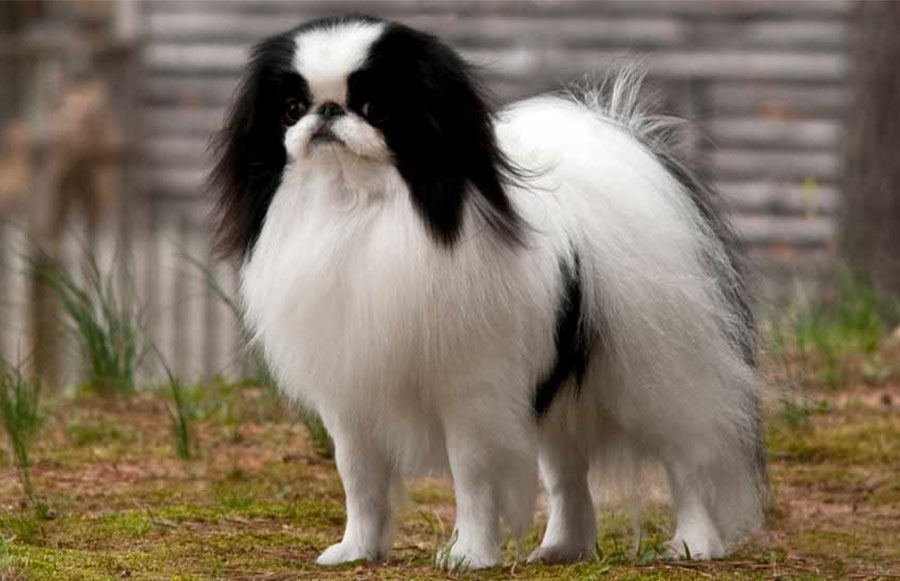
What distinguishes the Chin from its cousin breeds — the Pekingese and the Shih Tzu — is a particular combination of physical refinement and behavioral temperament. Where the Pekingese carries a heavier, more lion-like build and a more stubborn disposition, and the Shih Tzu tends toward a more robust, outgoing personality, the Chin is notably more delicate in both frame and manner. The breed's widely spaced, large dark eyes, domed skull, and profuse silky coat give it an almost symmetrical facial blaze pattern unique among flat-faced toy breeds. Perhaps most distinctively, the Chin is consistently described across cultures and centuries as cat-like — a dog that grooms itself with its paws, seeks elevated perches, and moves with an almost preternatural quiet grace.
At a Glance
Quick Facts
- Breed Group:
- Toy
- Bred For:
- Lapdog
- Origin:
- Japan
- Life Span:
- 12 - 14 years
- Weight:
- 4 - 9 lbs
- Height:
- 8 - 11 in
💰 Japanese Chin Cost Guide
Food · Vet · Grooming · Insurance · Full breakdown
Frequently Asked Questions
What is the temperament of a Japanese Chin?
Japanese Chins are known to be alert, loyal, independent, intelligent, loving, playful, affectionate, friendly, curious, gentle. This combination of traits makes them excellent companions for families with children. Their temperament is influenced by both genetics and proper socialization from an early age.
How much exercise does a Japanese Chin need?
Japanese Chins are high-energy dogs requiring 60+ minutes of vigorous daily exercise and mental stimulation.
How often should I groom my Japanese Chin?
Japanese Chins need moderate grooming including brushing 2-3 times weekly and regular maintenance.
How do I train a Japanese Chin?
Japanese Chins may require extra patience during training and respond best to positive, consistent methods.
Are Japanese Chins good with children?
Japanese Chins are excellent with children. Their natural patience, gentle nature, and resilience make them outstanding family dogs. They typically form strong bonds with children and tend to be forgiving of the occasional accidental rough handling that can occur with younger kids. Remember that proper socialization and teaching children appropriate interaction with dogs are always important, regardless of breed.
What makes the Japanese Chin unique compared to other dog breeds?
The Japanese Chin stands out from other breeds due to its rich heritage from Japan, specialized abilities for lapdog. This unique combination of characteristics makes them special among dog breeds and appeals to owners who appreciate these distinct qualities. Understanding these traits helps provide appropriate care tailored to their specific needs.
What should I know before getting a Japanese Chin?
Before bringing a Japanese Chin into your home, potential owners should consider: They have high exercise requirements (4/5) and need an active owner. They typically excel in family environments with children (5/5 child-friendliness). They can be challenging to train (2/5) and are better suited for experienced dog owners. They may be prone to breed-specific health issues including Brachycephalic Syndrome, Patellar Luxation, Progressive Retinal Atrophy, Heart Disease (Mitral Valve), Cataracts. Additionally, researching reputable breeders or rescue organizations is essential for finding a healthy, well-socialized Japanese Chin. Understanding these factors will help ensure a good match between the breed and your lifestyle, leading to a happy relationship for both you and your dog.
What were Japanese Chins originally bred for?
Japanese Chins were originally bred for lapdog. This companion-focused breeding has resulted in their affectionate, people-oriented temperament that makes them excellent pets. As part of the Toy group, they share characteristics with other breeds developed for similar purposes. Understanding your Japanese Chin's breeding heritage helps explain many of their natural behaviors and instincts, which can be channeled appropriately through training and enrichment activities. Even though modern Japanese Chins are primarily companions, these inherent traits remain part of their genetic makeup.
How long do Japanese Chins typically live?
The average lifespan of a Japanese Chin is 12 - 14 years. With proper care including quality nutrition, regular veterinary check-ups, appropriate exercise, and preventative healthcare, some Japanese Chins may live beyond this range. Genetics, environment, and healthcare all play important roles in determining longevity.
Are Japanese Chin good apartment dogs?
Yes, Japanese Chin are exceptionally well-suited to apartment living. They are a quiet breed by nature — not prone to nuisance barking — and their exercise requirements are modest. Short daily walks and indoor play sessions are sufficient to keep them physically satisfied. Their small size means they don't need significant floor space, and they tend to select a favorite person and follow them room to room rather than ranging independently. The one apartment-specific caveat is that Chin do not tolerate being left alone for long stretches. They bond deeply to their people and can develop anxiety if isolated for eight or more hours daily without interaction.
Do Japanese Chin have breathing problems?
Many Japanese Chin experience some degree of brachycephalic airway compromise due to their flat facial structure. This can range from mild — occasional snoring and light snorting — to more significant obstruction involving stenotic nares (narrowed nostrils) and an elongated soft palate. Not every Chin requires surgical intervention, but owners should monitor for labored breathing during exercise, gagging, or visible effort at rest. Hot and humid weather is particularly risky for brachycephalic dogs. If a Chin shows persistent respiratory distress or cannot exercise without prolonged recovery, evaluation by a veterinarian familiar with brachycephalic breeds is warranted. Corrective surgery, when needed, is well-established and typically produces significant improvement.
Why does my Japanese Chin act like a cat?
The cat comparison for Japanese Chin is one of the most consistently documented behavioral traits in the breed's history, and it is not coincidental. Chin groom themselves by licking their paws and wiping their faces — a behavior almost never seen in other dog breeds. They seek elevated perches, preferring the back of sofas, chair arms, and windowsills over floor-level spots. They are quiet, move with deliberate grace, and tend to observe situations carefully before engaging. They are also more independent in their affection than most companion breeds — they choose when to cuddle rather than constantly soliciting attention. This behavioral profile likely reflects centuries of indoor palace living, where adaptation to a quiet, refined environment was rewarded over generations.
How long do Japanese Chin live?
Japanese Chin have a typical lifespan of 12 to 14 years, which is consistent with well-bred toy breeds of similar size. Some individuals live to 15 years or beyond, particularly those from health-tested lines that have avoided the compounding effects of untreated brachycephalic syndrome or progressive heart disease. The leading causes of mortality in the breed are cardiac disease — specifically Mitral Valve Disease — and complications from respiratory compromise. Chin that receive regular veterinary monitoring, including annual cardiac auscultation and ophthalmologic exams after age five, and that are kept at a healthy weight to reduce pressure on both the airway and the joints, consistently reach the upper end of the lifespan range.
Additional Characteristics
Care Requirements
They are high-energy dogs that need significant daily exercise and mental stimulation.
They need moderate grooming, including regular brushing and occasional professional care.
May require extra patience — better suited for experienced owners
They are excellent with children and often form strong bonds with them.
Japanese Chin
Complete Breed Guide
About the Japanese Chin
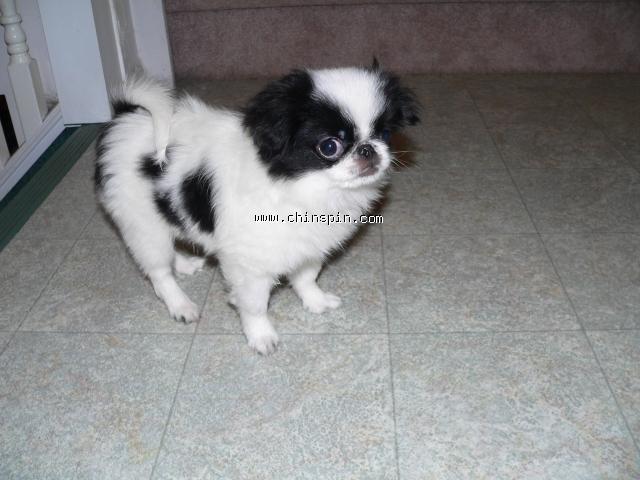
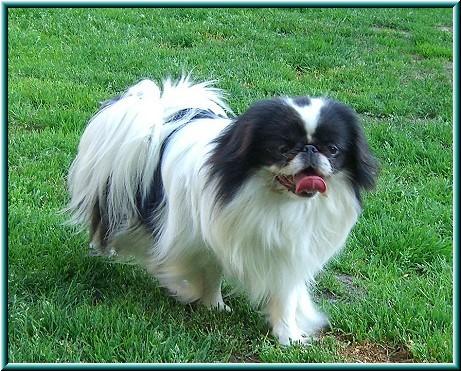
The Japanese Chin is a toy breed that originated in Japan, where it was bred as a companion for nobility. Weighing between 4 to 9 pounds and standing 8 to 11 inches tall, this breed is characterized by its elegant appearance, featuring a long, flowing coat and a distinctive pushed-in face. Known for their alert and affectionate temperament, Japanese Chins are intelligent and playful, often displaying a cat-like demeanor, making them excellent companions in a variety of living situations. Their lifespan typically ranges from 12 to 14 years.
Japanese Chins are known for being alert, loyal, independent, intelligent, loving, and playful, affectionate, friendly. As a high-energy breed, they are independent-minded and requiring patient, consistent training and thrive with regular mental and physical activity. They are excellent with children of all ages and friendly with other dogs, making them a popular choice for families and experienced dog owners alike.
Caring for a Japanese Chin means committing to moderate grooming every week or two, vigorous daily exercise, and consistent training from an early age. Their gentle, social nature makes them a wonderful addition to active families.
At a Glance
Quick Facts
- Breed Group:
- Toy
- Bred For:
- Lapdog
- Origin:
- Japan
- Life Span:
- 12 - 14 years
- Weight:
- 4 - 9 lbs
- Height:
- 8 - 11 in
Temperament
Free Japanese Chin Health Guide
Japanese Chins can be prone to Brachycephalic Syndrome and other conditions. Get our owner's health checklist and monthly vet tips — free.
- ✓Japanese Chin-specific health warning signs
- ✓Vet visit checklist & cost tracker
- ✓Monthly breed health newsletter
Finding similar breeds...
How We Find Similar Breeds
We analyze breed characteristics including temperament, size, appearance, and care needs to identify the most similar dog breeds. This helps you discover alternatives that might be a good match for your lifestyle and preferences.
Explore Related Breeds & Guides
Adopt a Japanese Chin
Filter to show only purebred Japanese Chins (excludes mixed breeds and crosses)
Find Dogs Near You
Enter your location to discover adoptable pets nearby
How to Adopt a Japanese Chin
Follow these steps to ensure a smooth and responsible adoption process. Remember that adopting a dog is a lifelong commitment.
Research the Breed
Learn everything you can about Japanese Chins, including their temperament, exercise needs, grooming requirements, and potential health issues.
Find Reputable Sources
Look for adoptable dogs through shelters, rescue organizations, or responsible breeders. Avoid puppy mills and online scams.
Apply for Adoption
Complete an adoption application with your chosen organization. Be prepared to provide references and possibly go through a home visit.
Meet Your Potential Pet
Schedule a meeting with the dog to assess compatibility with you, your family, and any existing pets.
Prepare Your Home
Gather necessary supplies and dog-proof your home before bringing your new pet home.
1Essential Supplies
Food and water bowls, high-quality dog food, collar with ID tag, leash, bed, crate, toys, treats, grooming supplies, and cleaning products for accidents.
2Create a Safe Space
Designate an area where your dog can retreat when feeling overwhelmed. This could be a crate with comfortable bedding or a quiet corner with their bed.
3Remove Hazards
Secure or remove toxic plants, chemicals, small objects that could be swallowed, and foods that are harmful to dogs. Use baby gates if needed to restrict access to certain areas.
4Find a Veterinarian
Research and choose a veterinarian before bringing your dog home, and schedule an initial check-up shortly after adoption.
What is the dog's background and history?
Understanding a dog's past can help you anticipate potential behavior issues and provide appropriate support.
Has the dog been spayed/neutered and vaccinated?
This information is important for planning future veterinary care and understanding any immediate medical needs.
What is the dog's energy level and exercise needs?
Japanese Chins typically need regular exercise to stay healthy and happy. Ask about specific exercise requirements.
Has the dog been socialized with other animals and people?
This helps you understand how the dog might interact with your family, friends, and other pets.
Are there any known behavioral or health issues?
Knowing about existing issues helps you prepare for any special care or training needs.
Special Considerations for Japanese Chins
- Japanese Chins may have specific health concerns that require regular monitoring.
- Consider how the typical Japanese Chin temperament aligns with your lifestyle.
- Research the grooming needs of Japanese Chins to ensure you can commit to the required maintenance.
- Understand the exercise requirements of Japanese Chins to keep them healthy and prevent behavior problems.
- Learn about proper training methods that work well with Japanese Chins.
 Japanese Chin — Official AKC Breed VideoAmerican Kennel Club
Watch the official AKC video covering temperament, history, traits, and care.
Watch on YouTube →Product Recommendations for Japanese Chins
See all →Vet-reviewed picks for food, insurance, crates, brushes, treats, and toys — matched to this breed.
Compare Japanese Chin with Similar Breeds
See how the Japanese Chin stacks up against other breeds side by side.