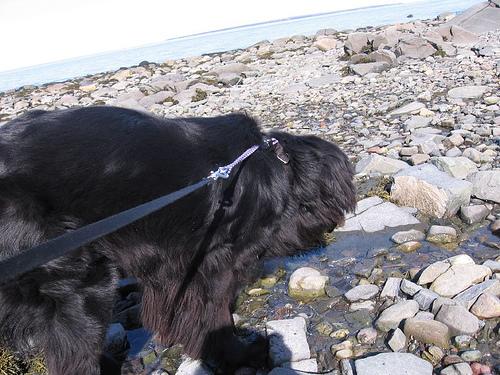
Newfoundland
Temperament
About the Newfoundland
The Newfoundland is a breed with deep roots in the working fishing communities of Canada's Atlantic coast, developed in earnest during the 1700s on the island of Newfoundland. While the breed's precise ancestry remains debated among historians, the most widely accepted theory traces its origins to the 1662 settlement period, when European fishermen — likely French and English — brought their dogs to the island. Great Pyrenees dogs are frequently cited as foundational stock, crossed with black English retrievers and possibly husky-type dogs already present in the region. The result was a dog purpose-built for the North Atlantic: massive, cold-tolerant, and possessing an instinctive affinity for water.
Those fishermen weren't breeding for aesthetics. They needed a dog that could haul nets, retrieve lines that fell overboard, carry loads between boat and shore, and — critically — pull drowning men from frigid water. The Newfoundland fulfilled every one of those demands. Its webbed feet, broad lung capacity, and powerful double coat made it uniquely suited to water rescue work in conditions that would kill most breeds. This working lineage is not merely historical trivia; it shapes the breed's temperament and physical capability to this day.
Formalized breed recognition came in 1879 when the American Kennel Club acknowledged the Newfoundland as one of its earliest registered breeds, placing it in the Working Group — a classification that still accurately describes the dog's functional design. The Newfoundland Club of America, founded in 1930, remains the AKC's official parent club for the breed and actively promotes health testing, rescue efforts, and working titles including the Water Dog (WD) and Draft Dog (DD) certifications, which reward dogs that demonstrate the breed's original functional skills.
What distinguishes the Newfoundland from its geographic neighbor the Labrador Retriever — another breed developed in the same Atlantic Canadian fishing culture — is primarily scale, coat type, and temperament calibration. Where the Labrador is energetic, compact, and eager for high-velocity interaction, the Newfoundland is deliberate, massive, and composed. It is also distinct from the Great Pyrenees, despite the shared ancestry, in that the Pyrenees was bred as an independent livestock guardian while the Newfoundland was bred to work in close partnership with humans. That collaborative instinct is perhaps the breed's most defining characteristic and underpins everything from its trainability to its legendary patience with children, which earned it the informal title of "nanny dog" — a designation famously reinforced by J.M. Barrie, who based the Darling family's dog Nana in Peter Pan on his own Newfoundland.
At a Glance
Quick Facts
- Breed Group:
- Working
- Bred For:
- All purpose water dog, fishing aid
- Origin:
- Canada
- Life Span:
- 8 - 10 years
- Weight:
- 100 - 150 lbs
- Height:
- 26 - 28 in
💰 Newfoundland Cost Guide
Food · Vet · Grooming · Insurance · Full breakdown
Frequently Asked Questions
What is the temperament of a Newfoundland?
Newfoundlands are known to be sweet-tempered, gentle, trainable, patient, loyal, loving. This combination of traits makes them wonderful companions for most households. Their temperament is influenced by both genetics and proper socialization from an early age.
How much exercise does a Newfoundland need?
Newfoundlands are high-energy dogs requiring 60+ minutes of vigorous daily exercise and mental stimulation.
How often should I groom my Newfoundland?
Newfoundlands need moderate grooming including brushing 2-3 times weekly and regular maintenance.
How do I train a Newfoundland?
Newfoundlands are highly trainable and typically respond well to positive reinforcement methods.
Are Newfoundlands good with children?
Newfoundlands are moderately good with children. They can adapt well to family life when properly socialized with children. Teaching children to respect the dog's boundaries and supervising interactions will help ensure a positive relationship. Remember that proper socialization and teaching children appropriate interaction with dogs are always important, regardless of breed.
What makes the Newfoundland unique compared to other dog breeds?
The Newfoundland stands out from other breeds due to its impressive stature and presence, rich heritage from Canada, specialized abilities for all purpose water dog, fishing aid. This unique combination of characteristics makes them special among dog breeds and appeals to owners who appreciate these distinct qualities. Understanding these traits helps provide appropriate care tailored to their specific needs.
What should I know before getting a Newfoundland?
Before bringing a Newfoundland into your home, potential owners should consider: They have high exercise requirements (4/5) and need an active owner. They're typically highly trainable (4/5) and eager to learn. Their large size requires adequate living space. They may be prone to breed-specific health issues including Hip Dysplasia, Sub-Aortic Stenosis (SAS), Cystinuria, Bloat (GDV), Elbow Dysplasia, Dilated Cardiomyopathy. Additionally, researching reputable breeders or rescue organizations is essential for finding a healthy, well-socialized Newfoundland. Understanding these factors will help ensure a good match between the breed and your lifestyle, leading to a happy relationship for both you and your dog.
What were Newfoundlands originally bred for?
Newfoundlands were originally bred for all purpose water dog, fishing aid. As part of the Working group, they share characteristics with other breeds developed for similar purposes. Understanding your Newfoundland's breeding heritage helps explain many of their natural behaviors and instincts, which can be channeled appropriately through training and enrichment activities. Even though modern Newfoundlands are primarily companions, these inherent traits remain part of their genetic makeup.
How long do Newfoundlands typically live?
The average lifespan of a Newfoundland is 8 - 10 years. With proper care including quality nutrition, regular veterinary check-ups, appropriate exercise, and preventative healthcare, some Newfoundlands may live beyond this range. Genetics, environment, and healthcare all play important roles in determining longevity.
Do Newfoundlands drool a lot?
Yes — this is one of the breed's most reliably consistent traits, and prospective owners should take it seriously as a lifestyle consideration. Newfoundlands have loose, pendulous lips that do not contain saliva efficiently, and the result is significant drooling, particularly around mealtimes, after drinking water, and during periods of excitement or heat. Many Newfoundland owners keep a dedicated drool rag on hand at all times and accept that walls, clothing, and furniture in proximity to the dog will require regular wiping. It is not a correctable behavior. If drool is a dealbreaker in your household, this is not the right breed for you.
Are Newfoundlands good with small children?
Newfoundlands have one of the most well-documented temperaments for patience with children of any large breed, which is the origin of the informal "nanny dog" designation. Their baseline disposition is gentle, tolerant, and protective without being reactive. However, the breed's sheer size introduces a practical concern that has nothing to do with temperament — a 130-pound dog can knock a toddler over simply by turning around. Young children should always be supervised around any large dog regardless of temperament, and children in the home should be taught how to interact with the dog respectfully. With appropriate supervision and socialization, Newfoundlands are genuinely exceptional family dogs for households with children of all ages.
How much exercise does a Newfoundland need daily?
Newfoundlands are categorized as a low-to-moderate energy breed, but that description can mislead owners into underexercising them. Adults benefit from 30 to 60 minutes of moderate activity daily — ideally including swimming, which is both physically appropriate and deeply natural for the breed. Long, forced runs in heat are not appropriate for Newfoundlands; they are cold-climate dogs that overheat readily in warm weather. Mental stimulation through training, draft work, or water rescue activities satisfies the breed's working intelligence as meaningfully as physical exercise. Puppies, counterintuitively, should be exercised conservatively — their large skeletal frames are vulnerable to joint damage from excessive impact exercise before growth plates close, typically around 18 to 24 months of age.
What is the average lifespan of a Newfoundland and why is it so short?
The Newfoundland's average lifespan of 8 to 10 years reflects a pattern common across giant breeds — larger body mass correlates with accelerated aging and greater susceptibility to conditions like cancer, cardiac disease, and orthopedic deterioration. Newfoundlands specifically face cardiac risks including Sub-Aortic Stenosis and Dilated Cardiomyopathy that can shorten lifespan significantly in affected individuals. Responsible breeding practices — including mandatory cardiac clearances — have improved the breed's cardiac health profile over the past several decades, but the fundamental biology of a giant-breed dog means the lifespan ceiling is lower than it is for medium or small breeds. Owners who choose this breed should do so with full awareness that the relationship, while profound, may span only a decade.
Additional Characteristics
Care Requirements
They are high-energy dogs that need significant daily exercise and mental stimulation.
They need moderate grooming, including regular brushing and occasional professional care.
Highly trainable — quick to learn and eager to please
They are moderately good with children, especially when properly socialized.
Newfoundland
Complete Breed Guide
About the Newfoundland
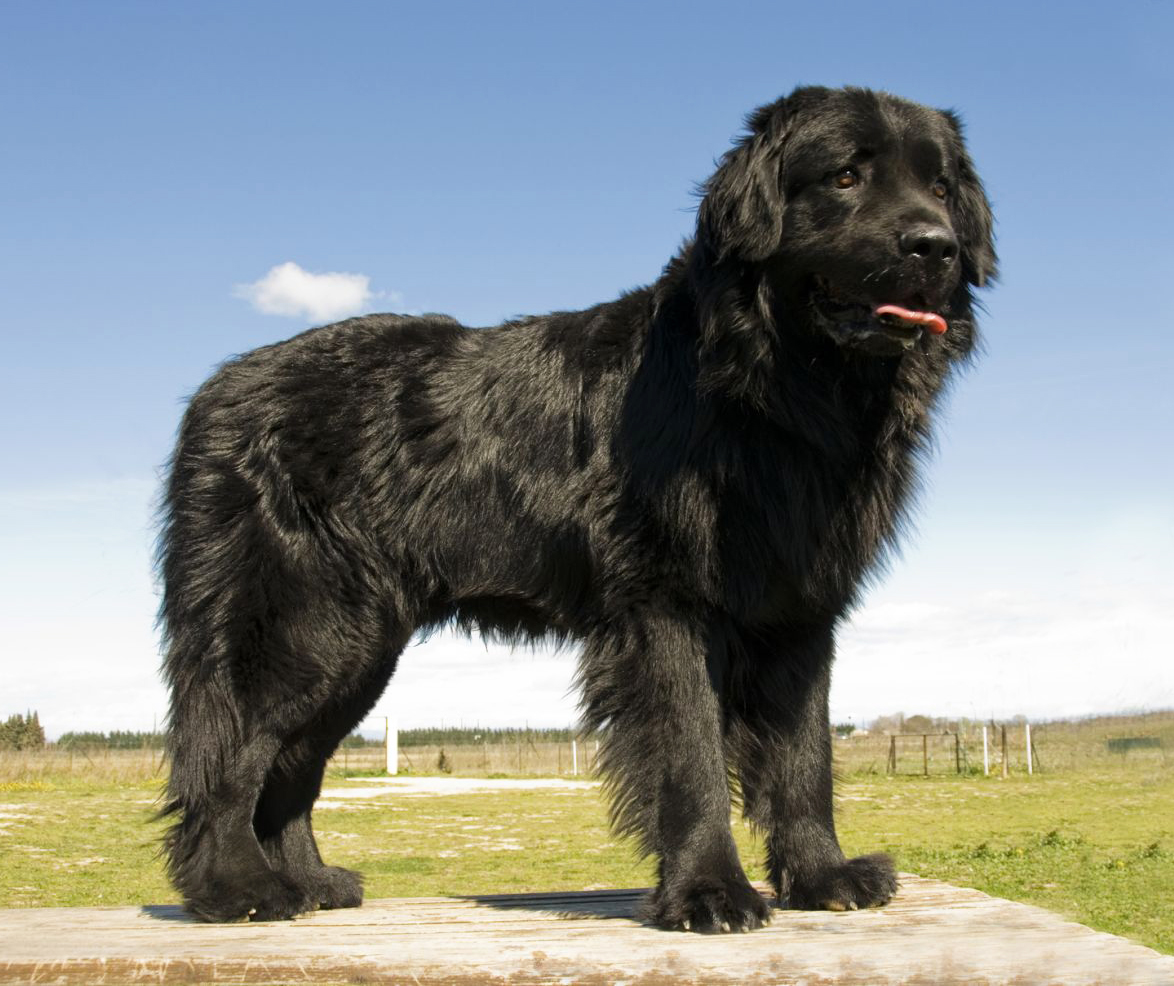
The Newfoundland dog, originating from the Canadian island of Newfoundland, was historically used by fishermen for water rescues and hauling nets. This large breed typically weighs between 100 to 150 pounds and stands 26 to 28 inches tall at the shoulder. Known for their sweet-tempered and gentle nature, Newfoundlands are excellent family companions and are recognized for their strong swimming ability and webbed feet, making them adept in water-related tasks. Their lifespan ranges from 8 to 10 years.
Newfoundlands are known for being sweet-tempered, gentle, trainable, patient, loyal, and loving. As a high-energy breed, they are highly responsive to training and thrive with regular mental and physical activity. They are generally good with children and sociable with other dogs when properly introduced, making them a popular choice for families and experienced dog owners alike.
Caring for a Newfoundland means committing to moderate grooming every week or two, vigorous daily exercise, and consistent training from an early age. With the right environment and socialization, they make loyal and loving companions.
At a Glance
Quick Facts
- Breed Group:
- Working
- Bred For:
- All purpose water dog, fishing aid
- Origin:
- Canada
- Life Span:
- 8 - 10 years
- Weight:
- 100 - 150 lbs
- Height:
- 26 - 28 in
Temperament
Free Newfoundland Health Guide
Newfoundlands can be prone to Hip Dysplasia and other conditions. Get our owner's health checklist and monthly vet tips — free.
- ✓Newfoundland-specific health warning signs
- ✓Vet visit checklist & cost tracker
- ✓Monthly breed health newsletter
Finding similar breeds...
How We Find Similar Breeds
We analyze breed characteristics including temperament, size, appearance, and care needs to identify the most similar dog breeds. This helps you discover alternatives that might be a good match for your lifestyle and preferences.
Explore Related Breeds & Guides
Adopt a Newfoundland
Filter to show only purebred Newfoundlands (excludes mixed breeds and crosses)
Find Dogs Near You
Enter your location to discover adoptable pets nearby
How to Adopt a Newfoundland
Follow these steps to ensure a smooth and responsible adoption process. Remember that adopting a dog is a lifelong commitment.
Research the Breed
Learn everything you can about Newfoundlands, including their temperament, exercise needs, grooming requirements, and potential health issues.
Find Reputable Sources
Look for adoptable dogs through shelters, rescue organizations, or responsible breeders. Avoid puppy mills and online scams.
Apply for Adoption
Complete an adoption application with your chosen organization. Be prepared to provide references and possibly go through a home visit.
Meet Your Potential Pet
Schedule a meeting with the dog to assess compatibility with you, your family, and any existing pets.
Prepare Your Home
Gather necessary supplies and dog-proof your home before bringing your new pet home.
1Essential Supplies
Food and water bowls, high-quality dog food, collar with ID tag, leash, bed, crate, toys, treats, grooming supplies, and cleaning products for accidents.
2Create a Safe Space
Designate an area where your dog can retreat when feeling overwhelmed. This could be a crate with comfortable bedding or a quiet corner with their bed.
3Remove Hazards
Secure or remove toxic plants, chemicals, small objects that could be swallowed, and foods that are harmful to dogs. Use baby gates if needed to restrict access to certain areas.
4Find a Veterinarian
Research and choose a veterinarian before bringing your dog home, and schedule an initial check-up shortly after adoption.
What is the dog's background and history?
Understanding a dog's past can help you anticipate potential behavior issues and provide appropriate support.
Has the dog been spayed/neutered and vaccinated?
This information is important for planning future veterinary care and understanding any immediate medical needs.
What is the dog's energy level and exercise needs?
Newfoundlands typically need regular exercise to stay healthy and happy. Ask about specific exercise requirements.
Has the dog been socialized with other animals and people?
This helps you understand how the dog might interact with your family, friends, and other pets.
Are there any known behavioral or health issues?
Knowing about existing issues helps you prepare for any special care or training needs.
Special Considerations for Newfoundlands
- Newfoundlands may have specific health concerns that require regular monitoring.
- Consider how the typical Newfoundland temperament aligns with your lifestyle.
- Research the grooming needs of Newfoundlands to ensure you can commit to the required maintenance.
- Understand the exercise requirements of Newfoundlands to keep them healthy and prevent behavior problems.
- Learn about proper training methods that work well with Newfoundlands.
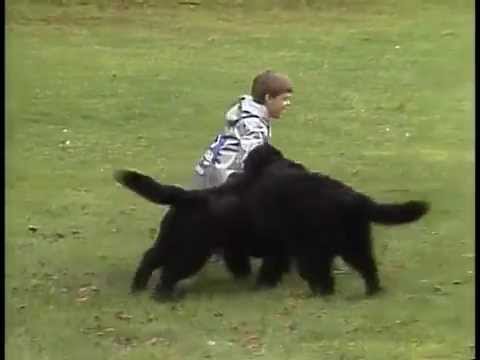 Newfoundland — Official AKC Breed VideoAmerican Kennel Club
Watch the official AKC video covering temperament, history, traits, and care.
Watch on YouTube →Product Recommendations for Newfoundlands
See all →Vet-reviewed picks for food, insurance, crates, brushes, treats, and toys — matched to this breed.
Compare Newfoundland with Similar Breeds
See how the Newfoundland stacks up against other breeds side by side.