


Pumi
Temperament
About the Pumi
The Pumi is one of three native Hungarian herding breeds, alongside the Puli and the Mudi, and its development tells a story of deliberate crossbreeding rather than ancient isolation. The breed took shape in Hungary during the 17th and 18th centuries, when Hungarian shepherds crossed their existing Puli-type herding dogs with terrier and spitz-type dogs brought in from Western Europe, likely from Germany and France. The result was a lighter, more agile, and more vocal dog than the Puli — one built not just to maintain a flock but to actively drive and gather cattle and sheep across the varied terrain of the Hungarian countryside. While the Puli is known for its heavily corded coat and calm, controlling style of herding, the Pumi uses noise, quick movement, and persistent nipping to move livestock, making it a fundamentally different working tool despite the shared ancestry.
The breed was formally described and distinguished from the Puli by Dr. Emil Raitsits in the early 20th century, with the first breed standard established in Hungary in 1920. Recognition from the Fédération Cynologique Internationale followed, and the FCI currently classifies the Pumi under Group 1 — Sheepdogs and Cattledogs. In Hungary, the breed has never been rare, functioning as a working farm dog well into the modern era, but outside Central Europe it remained almost completely unknown until dedicated fanciers began export efforts in the late 20th century.
The Hungarian Pumi Club of America, known as the HPCA, was instrumental in bringing the breed to formal recognition in the United States. The Pumi was admitted to the AKC's Miscellaneous Class in 2011 and achieved full AKC recognition on July 1, 2016, placing it in the Herding Group. As of current AKC rankings, the Pumi sits around 169th out of 205 recognized breeds, reflecting its status as a dedicated niche breed rather than a mainstream companion.
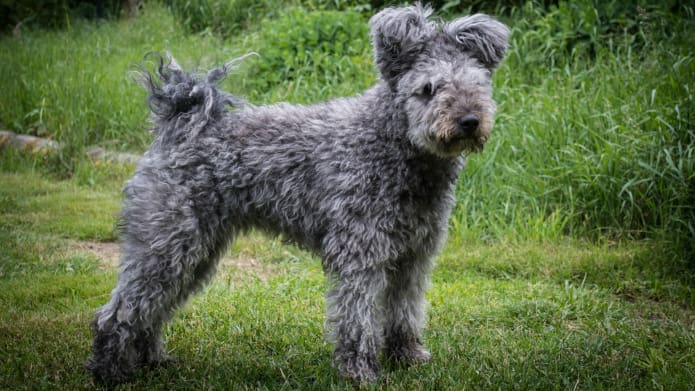
Physically, the Pumi is immediately distinctive. Its coat forms tight curls or corkscrews and never cords like a Puli's, and it requires a specific grooming technique — wet combing followed by air drying — to maintain its characteristic texture. The ears are perhaps the breed's most memorable feature: roughly two-thirds erect, with the top third folding forward, giving the dog a permanently alert, almost quizzical expression. The elongated muzzle, dark oblique eyes, and high-set tail carried in a curl over the back complete a silhouette unlike any other herding breed. At 18 to 33 pounds and 15 to 18.5 inches at the shoulder, the Pumi is compact but sturdy, with the elastic pads and hard nails of a dog built to work rough ground.
At a Glance
Quick Facts
- Breed Group:
- Herding
- Origin:
- Hungary
- Life Span:
- 13 - 15 years
- Weight:
- 18 - 33 lbs
- Height:
- 15 - 18.5 in
💰 Pumi Cost Guide
Food · Vet · Grooming · Insurance · Full breakdown
Frequently Asked Questions
What is the temperament of a Pumi?
Pumis are known to be lively, reserved, intelligent, active, protective, vocal. This combination of traits makes them excellent watchdogs and devoted family protectors. Their temperament is influenced by both genetics and proper socialization from an early age.
How much exercise does a Pumi need?
Pumis are high-energy dogs requiring 60+ minutes of vigorous daily exercise and mental stimulation.
How often should I groom my Pumi?
Pumis need moderate grooming including brushing 2-3 times weekly and regular maintenance.
How do I train a Pumi?
Pumis have moderate trainability and benefit from consistent, positive training approaches.
Are Pumis good with children?
Pumis are excellent with children. Their natural patience, gentle nature, and resilience make them outstanding family dogs. They typically form strong bonds with children and tend to be forgiving of the occasional accidental rough handling that can occur with younger kids. Remember that proper socialization and teaching children appropriate interaction with dogs are always important, regardless of breed.
What makes the Pumi unique compared to other dog breeds?
The Pumi stands out from other breeds due to its rich heritage from Hungary. This unique combination of characteristics makes them special among dog breeds and appeals to owners who appreciate these distinct qualities. Understanding these traits helps provide appropriate care tailored to their specific needs.
What should I know before getting a Pumi?
Before bringing a Pumi into your home, potential owners should consider: They have high exercise requirements (4/5) and need an active owner. They typically excel in family environments with children (5/5 child-friendliness). They may be prone to breed-specific health issues including Hip Dysplasia, Progressive Retinal Atrophy, Degenerative Myelopathy, Patellar Luxation. Additionally, researching reputable breeders or rescue organizations is essential for finding a healthy, well-socialized Pumi. Understanding these factors will help ensure a good match between the breed and your lifestyle, leading to a happy relationship for both you and your dog.
What were Pumis originally bred for?
As part of the Herding group, they share characteristics with other breeds developed for similar purposes. Understanding your Pumi's breeding heritage helps explain many of their natural behaviors and instincts, which can be channeled appropriately through training and enrichment activities. Even though modern Pumis are primarily companions, these inherent traits remain part of their genetic makeup.
How long do Pumis typically live?
The average lifespan of a Pumi is 13 - 15 years. With proper care including quality nutrition, regular veterinary check-ups, appropriate exercise, and preventative healthcare, some Pumis may live beyond this range. Genetics, environment, and healthcare all play important roles in determining longevity.
Do Pumi dogs bark a lot?
Yes, the Pumi is a naturally vocal breed — barking was a functional part of its working role, used to move and control livestock. Pumik will alert bark at strangers, unfamiliar sounds, and anything they perceive as a change in their environment. This tendency can be managed through consistent training and adequate mental and physical exercise, but it cannot be fully eliminated because it is hardwired into the breed's working character. Pumik left alone for long periods or under-stimulated will bark more than those with structured daily activity. Apartment living is possible but requires realistic expectations and committed noise management.
How much exercise does a Pumi need every day?
The Pumi is a high-energy herding breed that requires a minimum of 60 to 90 minutes of genuine physical activity per day, and mental stimulation on top of that. A walk around the block is not sufficient — the breed needs opportunities to run, problem-solve, and engage its herding instincts. Agility, fetch, herding trials, and nose work are all well-suited to the Pumi's energy level and intelligence. A Pumi that does not receive adequate daily exercise will redirect that energy into undesirable behaviors including excessive barking, destructive chewing, and attempts to herd household members and pets.
Are Pumik good with children and other pets?
Pumik can be excellent family dogs, but their herding instincts mean they will naturally attempt to herd small children by nipping at heels and legs — a behavior that requires early redirection through training rather than punishment. With proper socialization from puppyhood, most Pumik coexist well with children who understand how to interact with dogs calmly. With other pets, the breed's prey drive and herding instinct can cause friction with cats or small animals, though many Pumik live successfully in multi-pet households when introduced carefully. The breed's reserved nature means it is typically selective rather than immediately friendly with strangers and unfamiliar animals.
How do you groom a Pumi's curly coat?
Pumi coat care is specific and counterintuitive to owners familiar with other long-coated breeds. The coat should never be brushed when dry, as this destroys the curl pattern and creates an incorrect frizzy texture. Instead, the coat is wetted thoroughly, combed out while wet to remove tangles and debris, and then left to air dry completely without any brushing or towel-drying that would disturb the curl formation. The coat grows continuously and needs trimming every eight to twelve weeks to maintain the correct silhouette. Scissoring rather than clipping is preferred to preserve the coat texture. Many owners find that learning the technique themselves through guidance from a knowledgeable breeder reduces long-term grooming costs significantly.
Additional Characteristics
Care Requirements
They are high-energy dogs that need significant daily exercise and mental stimulation.
They need moderate grooming, including regular brushing and occasional professional care.
Moderately trainable with consistent methods
They are excellent with children and often form strong bonds with them.
Pumi
Complete Breed Guide
About the Pumi
The Pumi is a herding dog breed that originated in Hungary, specifically in the region of Vengriya, where it was developed for herding livestock. This breed typically weighs between 18 to 33 pounds and stands 15 to 18.5 inches tall, featuring a distinctive curly coat that provides protection from the elements. Pumis are known for their lively and intelligent temperament, making them active and vocal companions, while also being reserved with strangers, which contributes to their protective nature.
Pumis are known for being lively, reserved, intelligent, active, protective, and vocal. As a high-energy breed, they are moderately trainable and thrive with regular mental and physical activity. They are excellent with children of all ages and friendly with other dogs, making them a popular choice for families and experienced dog owners alike.
Caring for a Pumi means committing to moderate grooming every week or two, vigorous daily exercise, and consistent training from an early age. Their gentle, social nature makes them a wonderful addition to active families.
At a Glance
Quick Facts
- Breed Group:
- Herding
- Origin:
- Hungary
- Life Span:
- 13 - 15 years
- Weight:
- 18 - 33 lbs
- Height:
- 15 - 18.5 in
Temperament
Free Pumi Health Guide
Pumis can be prone to Hip Dysplasia and other conditions. Get our owner's health checklist and monthly vet tips — free.
- ✓Pumi-specific health warning signs
- ✓Vet visit checklist & cost tracker
- ✓Monthly breed health newsletter
Finding similar breeds...
How We Find Similar Breeds
We analyze breed characteristics including temperament, size, appearance, and care needs to identify the most similar dog breeds. This helps you discover alternatives that might be a good match for your lifestyle and preferences.
Explore Related Breeds & Guides
Adopt a Pumi
Filter to show only purebred Pumis (excludes mixed breeds and crosses)
Find Dogs Near You
Enter your location to discover adoptable pets nearby
How to Adopt a Pumi
Follow these steps to ensure a smooth and responsible adoption process. Remember that adopting a dog is a lifelong commitment.
Research the Breed
Learn everything you can about Pumis, including their temperament, exercise needs, grooming requirements, and potential health issues.
Find Reputable Sources
Look for adoptable dogs through shelters, rescue organizations, or responsible breeders. Avoid puppy mills and online scams.
Apply for Adoption
Complete an adoption application with your chosen organization. Be prepared to provide references and possibly go through a home visit.
Meet Your Potential Pet
Schedule a meeting with the dog to assess compatibility with you, your family, and any existing pets.
Prepare Your Home
Gather necessary supplies and dog-proof your home before bringing your new pet home.
1Essential Supplies
Food and water bowls, high-quality dog food, collar with ID tag, leash, bed, crate, toys, treats, grooming supplies, and cleaning products for accidents.
2Create a Safe Space
Designate an area where your dog can retreat when feeling overwhelmed. This could be a crate with comfortable bedding or a quiet corner with their bed.
3Remove Hazards
Secure or remove toxic plants, chemicals, small objects that could be swallowed, and foods that are harmful to dogs. Use baby gates if needed to restrict access to certain areas.
4Find a Veterinarian
Research and choose a veterinarian before bringing your dog home, and schedule an initial check-up shortly after adoption.
What is the dog's background and history?
Understanding a dog's past can help you anticipate potential behavior issues and provide appropriate support.
Has the dog been spayed/neutered and vaccinated?
This information is important for planning future veterinary care and understanding any immediate medical needs.
What is the dog's energy level and exercise needs?
Pumis typically need regular exercise to stay healthy and happy. Ask about specific exercise requirements.
Has the dog been socialized with other animals and people?
This helps you understand how the dog might interact with your family, friends, and other pets.
Are there any known behavioral or health issues?
Knowing about existing issues helps you prepare for any special care or training needs.
Special Considerations for Pumis
- Pumis may have specific health concerns that require regular monitoring.
- Consider how the typical Pumi temperament aligns with your lifestyle.
- Research the grooming needs of Pumis to ensure you can commit to the required maintenance.
- Understand the exercise requirements of Pumis to keep them healthy and prevent behavior problems.
- Learn about proper training methods that work well with Pumis.
Product Recommendations for Pumis
See all →Vet-reviewed picks for food, insurance, crates, brushes, treats, and toys — matched to this breed.
Compare Pumi with Similar Breeds
See how the Pumi stacks up against other breeds side by side.