

Rhodesian Ridgeback
Temperament
About the Rhodesian Ridgeback
The Rhodesian Ridgeback's origins trace back to a deliberate and practical need: European settlers in southern Africa needed a dog capable of surviving the harsh bush, holding lions at bay until hunters arrived, and guarding the homestead at night. The foundation of the breed lies with the Khoikhoi people — sometimes called the Hottentots — whose dogs had been hunting and guarding with a distinctive ridge of reversed hair along the spine for centuries. When Boer settlers arrived in the Cape Colony during the 1500s and 1600s, they brought with them mastiffs, Great Danes, Greyhounds, Bloodhounds, and various terriers. These European breeds interbred with the indigenous Khoikhoi ridged dogs, producing animals that combined the trailing instinct of scent hounds with the toughness and heat tolerance of native African dogs.
The breed was formalized much later. In 1875, a big-game hunter named Reverend Charles Helm brought two ridged dogs from the Cape Colony to Matabeleland, in what is now Zimbabwe, and introduced them to big-game hunter Cornelius van Rooyen. Van Rooyen spent roughly 35 years selectively breeding these dogs for the specific demands of lion hunting — an animal needed to track silently, work in a pack, and harass a lion long enough for a hunter on horseback to close the distance, all without getting killed. The result was a dog of exceptional courage, endurance, and physical power.
The modern breed standard was drafted by F.R. Barnes in Bulawayo, Southern Rhodesia — present-day Zimbabwe — in 1922. The South African Kennel Union approved that standard in 1927, cementing the breed's formal identity. The Rhodesian Ridgeback Club of the United States was founded in 1950, and the American Kennel Club recognized the breed in 1955, placing it in the Hound Group. Today, the AKC ranks the Ridgeback 43rd out of 205 recognized breeds in popularity, which reflects both its growing status as a family companion and the devoted community that surrounds it.
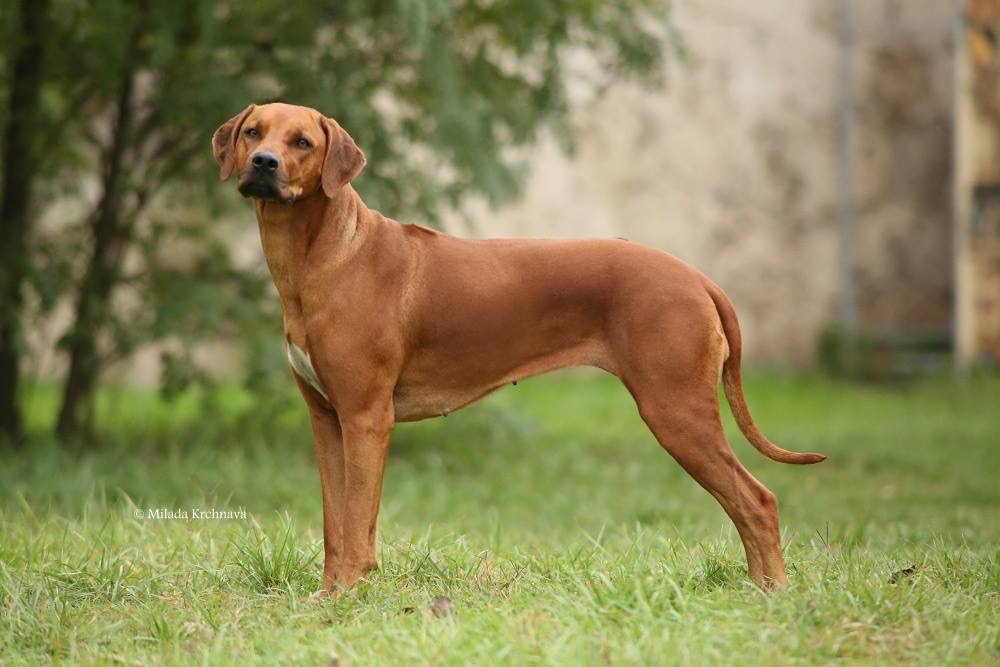
What makes the Ridgeback truly distinct among hounds is the ridge itself — a symmetrical strip of hair growing forward against the lay of the coat, originating at the shoulders and tapering to the hindquarters, bordered by two identical whorls called crowns. This feature is a hard requirement in the breed standard, not a cosmetic preference. The Ridgeback also stands apart from other African hunting breeds by its versatility: it is simultaneously a sight hound in speed, a scent hound in tracking ability, and a guardian in temperament — a combination that no other single breed quite replicates.
At a Glance
Quick Facts
- Breed Group:
- Hound
- Bred For:
- Big game hunting, guarding
- Origin:
- Zimbabwe
- Life Span:
- 10 - 12 years
- Weight:
- 75 - 80 lbs
- Height:
- 24 - 27 in
💰 Rhodesian Ridgeback Cost Guide
Food · Vet · Grooming · Insurance · Full breakdown
Frequently Asked Questions
What is the temperament of a Rhodesian Ridgeback?
Rhodesian Ridgebacks are known to be strong willed, mischievous, loyal, dignified, intelligent, affectionate, curious, friendly, playful, brave, independent. This combination of traits makes them excellent companions for families with children. Their temperament is influenced by both genetics and proper socialization from an early age.
How much exercise does a Rhodesian Ridgeback need?
Rhodesian Ridgebacks are high-energy dogs requiring 60+ minutes of vigorous daily exercise and mental stimulation.
How often should I groom my Rhodesian Ridgeback?
Rhodesian Ridgebacks require intensive grooming with daily brushing and regular professional grooming sessions.
How do I train a Rhodesian Ridgeback?
Rhodesian Ridgebacks are highly trainable and typically respond well to positive reinforcement methods.
Are Rhodesian Ridgebacks good with children?
Rhodesian Ridgebacks are excellent with children. Their natural patience, gentle nature, and resilience make them outstanding family dogs. They typically form strong bonds with children and tend to be forgiving of the occasional accidental rough handling that can occur with younger kids. Remember that proper socialization and teaching children appropriate interaction with dogs are always important, regardless of breed.
What makes the Rhodesian Ridgeback unique compared to other dog breeds?
The Rhodesian Ridgeback stands out from other breeds due to its dignified appearance and bearing, rich heritage from Zimbabwe, exceptional hunting abilities. This unique combination of characteristics makes them special among dog breeds and appeals to owners who appreciate these distinct qualities. Understanding these traits helps provide appropriate care tailored to their specific needs.
What should I know before getting a Rhodesian Ridgeback?
Before bringing a Rhodesian Ridgeback into your home, potential owners should consider: They have high exercise requirements (5/5) and need an active owner. Their coat requires significant maintenance (4/5) with regular grooming sessions. They typically excel in family environments with children (5/5 child-friendliness). They're typically highly trainable (4/5) and eager to learn. Their large size requires adequate living space. They may be prone to breed-specific health issues including Hip Dysplasia, Elbow Dysplasia, Dermoid Sinus, Bloat (GDV), Hypothyroidism, Degenerative Myelopathy. Additionally, researching reputable breeders or rescue organizations is essential for finding a healthy, well-socialized Rhodesian Ridgeback. Understanding these factors will help ensure a good match between the breed and your lifestyle, leading to a happy relationship for both you and your dog.
What were Rhodesian Ridgebacks originally bred for?
Rhodesian Ridgebacks were originally bred for big game hunting, guarding. This hunting background explains their natural prey drive, scenting abilities, and often high energy levels. As part of the Hound group, they share characteristics with other breeds developed for similar purposes. Understanding your Rhodesian Ridgeback's breeding heritage helps explain many of their natural behaviors and instincts, which can be channeled appropriately through training and enrichment activities. Even though modern Rhodesian Ridgebacks are primarily companions, these inherent traits remain part of their genetic makeup.
How long do Rhodesian Ridgebacks typically live?
The average lifespan of a Rhodesian Ridgeback is 10 - 12 years. With proper care including quality nutrition, regular veterinary check-ups, appropriate exercise, and preventative healthcare, some Rhodesian Ridgebacks may live beyond this range. Genetics, environment, and healthcare all play important roles in determining longevity.
Are Rhodesian Ridgebacks good family dogs with kids?
Rhodesian Ridgebacks can be excellent family dogs, but their size and physical exuberance require supervision around small children. A fully grown Ridgeback at 75 to 85 pounds can accidentally knock over a toddler simply by turning around enthusiastically. The breed is affectionate and tolerant of children it has been raised with, and individual dogs vary in their patience, but the Ridgeback is not naturally deferential — it is a confident, self-assured dog that expects to be treated with respect. Families with children over six who understand how to interact with large dogs typically have the best outcomes. Early socialization and obedience training are essential, and no dog of this size should be left unsupervised with very young children regardless of temperament.
How much exercise does a Rhodesian Ridgeback need every day?
Adult Rhodesian Ridgebacks need at least 60 to 90 minutes of vigorous exercise per day, though the quality of that exercise matters as much as the duration. A Ridgeback that runs freely in a safely fenced yard or accompanies an owner on a run or long hike will be far more satisfied than one walked slowly around the block for two hours. This breed was built for sustained effort over rough terrain, and without adequate physical output, Ridgebacks become destructive, restless, and difficult to live with. Puppies should not be over-exercised before 18 months — repetitive high-impact activity on developing joints can contribute to orthopedic problems. As adults, Ridgebacks make excellent running, hiking, and cycling partners, but they are also capable of surprising calm indoors when their exercise needs are genuinely met.
Do Rhodesian Ridgebacks get along with cats?
Whether a Rhodesian Ridgeback will coexist peacefully with cats depends significantly on the individual dog and its history. Ridgebacks have a strong prey drive rooted in their history of hunting large game, and cats — particularly cats they do not know — can trigger that instinct powerfully. Some Ridgebacks raised alongside cats from puppyhood learn to regard them as members of the household and ignore them reliably. Others never fully suppress the chase instinct regardless of how long they have lived with a cat. Adult Ridgebacks in rescue environments are typically evaluated by their foster families for cat tolerance before being placed in cat-owning homes. If you have cats and want a Ridgeback, look for a dog whose foster or previous home included cats without incident, and never leave the two unsupervised until the relationship is thoroughly established and proven.
What is the ridge on a Rhodesian Ridgeback and does every dog have one?
The ridge is the breed's most distinctive physical feature: a strip of hair growing in the opposite direction from the rest of the coat, running along the spine from behind the shoulders to roughly the hip area, bordered at its origin by two symmetrical whorls called crowns. It is a genetic trait tied to a dominant gene, meaning only one copy of the gene is needed to produce a ridge. However, this same gene is associated with dermoid sinus, a congenital defect in which spinal tissue fails to separate properly during fetal development. Puppies can be born without ridges — called ridgeless — and while they are disqualified from conformation showing under the AKC breed standard, they are otherwise healthy Ridgebacks and make equally capable companions. Ridgeless puppies are statistically less likely to carry dermoid sinus. The presence or absence of the ridge does not affect temperament, health in other respects, or the dog's capacity to be an excellent companion.
Additional Characteristics
Care Requirements
They are extremely energetic dogs requiring extensive daily exercise, activities, and mental stimulation.
They have high grooming needs requiring frequent brushing and regular professional grooming.
Highly trainable — quick to learn and eager to please
They are excellent with children and often form strong bonds with them.
Rhodesian Ridgeback
Complete Breed Guide
About the Rhodesian Ridgeback
The Rhodesian Ridgeback originated in Zimbabwe, where it was developed by indigenous Khoikhoi people and later by European settlers for hunting lions and other game. This breed is characterized by its distinctive ridge of hair along the back, short coat, and muscular build, typically weighing between 75 to 80 pounds and standing 24 to 27 inches tall. Known for their strong-willed and independent nature, Rhodesian Ridgebacks are also loyal and affectionate companions, making them suitable for active families while excelling in various canine sports and outdoor activities.
Rhodesian Ridgebacks are known for being strong willed, mischievous, loyal, dignified, intelligent, and affectionate, curious, friendly. As a high-energy breed, they are highly responsive to training and thrive with regular mental and physical activity. They are excellent with children of all ages and friendly with other dogs, making them a popular choice for families and experienced dog owners alike.
Caring for a Rhodesian Ridgeback means committing to regular grooming (brushing several times a week), intense daily exercise, and firm, consistent training. Their gentle, social nature makes them a wonderful addition to active families.
At a Glance
Quick Facts
- Breed Group:
- Hound
- Bred For:
- Big game hunting, guarding
- Origin:
- Zimbabwe
- Life Span:
- 10 - 12 years
- Weight:
- 75 - 80 lbs
- Height:
- 24 - 27 in
Temperament
Free Rhodesian Ridgeback Health Guide
Rhodesian Ridgebacks can be prone to Hip Dysplasia and other conditions. Get our owner's health checklist and monthly vet tips — free.
- ✓Rhodesian Ridgeback-specific health warning signs
- ✓Vet visit checklist & cost tracker
- ✓Monthly breed health newsletter
Finding similar breeds...
How We Find Similar Breeds
We analyze breed characteristics including temperament, size, appearance, and care needs to identify the most similar dog breeds. This helps you discover alternatives that might be a good match for your lifestyle and preferences.
Explore Related Breeds & Guides
Adopt a Rhodesian Ridgeback
Filter to show only purebred Rhodesian Ridgebacks (excludes mixed breeds and crosses)
Find Dogs Near You
Enter your location to discover adoptable pets nearby
How to Adopt a Rhodesian Ridgeback
Follow these steps to ensure a smooth and responsible adoption process. Remember that adopting a dog is a lifelong commitment.
Research the Breed
Learn everything you can about Rhodesian Ridgebacks, including their temperament, exercise needs, grooming requirements, and potential health issues.
Find Reputable Sources
Look for adoptable dogs through shelters, rescue organizations, or responsible breeders. Avoid puppy mills and online scams.
Apply for Adoption
Complete an adoption application with your chosen organization. Be prepared to provide references and possibly go through a home visit.
Meet Your Potential Pet
Schedule a meeting with the dog to assess compatibility with you, your family, and any existing pets.
Prepare Your Home
Gather necessary supplies and dog-proof your home before bringing your new pet home.
1Essential Supplies
Food and water bowls, high-quality dog food, collar with ID tag, leash, bed, crate, toys, treats, grooming supplies, and cleaning products for accidents.
2Create a Safe Space
Designate an area where your dog can retreat when feeling overwhelmed. This could be a crate with comfortable bedding or a quiet corner with their bed.
3Remove Hazards
Secure or remove toxic plants, chemicals, small objects that could be swallowed, and foods that are harmful to dogs. Use baby gates if needed to restrict access to certain areas.
4Find a Veterinarian
Research and choose a veterinarian before bringing your dog home, and schedule an initial check-up shortly after adoption.
What is the dog's background and history?
Understanding a dog's past can help you anticipate potential behavior issues and provide appropriate support.
Has the dog been spayed/neutered and vaccinated?
This information is important for planning future veterinary care and understanding any immediate medical needs.
What is the dog's energy level and exercise needs?
Rhodesian Ridgebacks typically need regular exercise to stay healthy and happy. Ask about specific exercise requirements.
Has the dog been socialized with other animals and people?
This helps you understand how the dog might interact with your family, friends, and other pets.
Are there any known behavioral or health issues?
Knowing about existing issues helps you prepare for any special care or training needs.
Special Considerations for Rhodesian Ridgebacks
- Rhodesian Ridgebacks may have specific health concerns that require regular monitoring.
- Consider how the typical Rhodesian Ridgeback temperament aligns with your lifestyle.
- Research the grooming needs of Rhodesian Ridgebacks to ensure you can commit to the required maintenance.
- Understand the exercise requirements of Rhodesian Ridgebacks to keep them healthy and prevent behavior problems.
- Learn about proper training methods that work well with Rhodesian Ridgebacks.
 Rhodesian Ridgeback — Official AKC Breed VideoAmerican Kennel Club
Watch the official AKC video covering temperament, history, traits, and care.
Watch on YouTube →Product Recommendations for Rhodesian Ridgebacks
See all →Vet-reviewed picks for food, insurance, crates, brushes, treats, and toys — matched to this breed.
Compare Rhodesian Ridgeback with Similar Breeds
See how the Rhodesian Ridgeback stacks up against other breeds side by side.