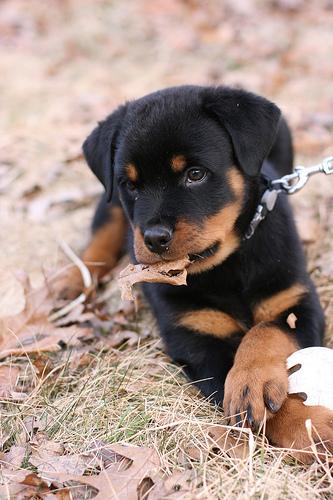
Rottweiler
Temperament
About the Rottweiler
The Rottweiler's story begins not in Germany but on the roads of the Roman Empire. Roman legions marching through the Alps into Europe relied on large molosser-type dogs to guard camps and drive cattle — a living food supply for the armies on the move. When those legions settled in the region of what is now southwestern Germany, some of those dogs stayed behind. The town of Rottweil, which takes its name from the red Roman roof tiles (Rotes Wil) excavated there, became the center of cattle trading in the region during the Middle Ages, and the descendants of those Roman drover dogs became indispensable to the local butchers. Known as the Rottweiler Metzgerhund — literally the Rottweil butchers' dog — they herded livestock to market and pulled carts laden with butchered meat. Local butchers reportedly tied their money purses around the dogs' necks for safekeeping, a nod to the breed's early reputation for both strength and trustworthiness.
By the mid-19th century, the rise of railways and new laws restricting cattle driving nearly wiped out the breed entirely. A traveler visiting Rottweil in 1900 reportedly found only one Rottweiler in the entire town. German dog enthusiasts stepped in. The Allgemeiner Deutscher Rottweiler Klub (ADRK) was founded in 1907 in Germany and remains the breed's international gold standard authority today. The ADRK maintains strict breeding standards and requires working titles before dogs can be used for breeding — a policy that has kept the Rottweiler's functional integrity intact in a way that few other breeds can claim. The American Kennel Club officially recognized the Rottweiler in 1931, and the breed is now represented in the United States by the American Rottweiler Club, founded in 1971, which serves as the AKC parent club.
What distinguishes the Rottweiler from other mastiff-type working breeds is the combination of herding instinct and guardian instinct coexisting in a single dog. Unlike the Doberman Pinscher, which was purpose-bred from scratch in the 1880s for personal protection, or the Bullmastiff, which was specifically engineered to apprehend poachers, the Rottweiler developed organically over centuries as a versatile working partner. That heritage produces a dog that can move livestock, pull weight, track, detect, and protect — often in the same afternoon. Today the Rottweiler ranks 8th out of 205 breeds in AKC popularity, a consistent top-ten placement it has held for decades, reflecting both its adaptability and its enduring appeal as a working companion and family dog.
At a Glance
Quick Facts
- Breed Group:
- Working
- Bred For:
- Cattle drover, guardian, draft
- Origin:
- Germany
- Life Span:
- 8 - 10 years
- Weight:
- 75 - 110 lbs
- Height:
- 22 - 27 in
💰 Rottweiler Cost Guide
Food · Vet · Grooming · Insurance · Full breakdown
Frequently Asked Questions
What is the temperament of a Rottweiler?
Rottweilers are known to be steady, good-natured, fearless, devoted, alert, obedient, confident, self-assured, calm, courageous, affectionate, friendly, playful. This combination of traits makes them excellent companions for families with children. Their temperament is influenced by both genetics and proper socialization from an early age.
How much exercise does a Rottweiler need?
Rottweilers have moderate energy levels and need 30-60 minutes of daily exercise including walks and playtime.
How often should I groom my Rottweiler?
Rottweilers need moderate grooming including brushing 2-3 times weekly and regular maintenance.
How do I train a Rottweiler?
Rottweilers are highly trainable and typically respond well to positive reinforcement methods.
Are Rottweilers good with children?
Rottweilers are excellent with children. Their natural patience, gentle nature, and resilience make them outstanding family dogs. They typically form strong bonds with children and tend to be forgiving of the occasional accidental rough handling that can occur with younger kids. Remember that proper socialization and teaching children appropriate interaction with dogs are always important, regardless of breed.
What makes the Rottweiler unique compared to other dog breeds?
The Rottweiler stands out from other breeds due to its rich heritage from Germany, natural protective instincts. This unique combination of characteristics makes them special among dog breeds and appeals to owners who appreciate these distinct qualities. Understanding these traits helps provide appropriate care tailored to their specific needs.
What should I know before getting a Rottweiler?
Before bringing a Rottweiler into your home, potential owners should consider: They typically excel in family environments with children (5/5 child-friendliness). They're typically highly trainable (5/5) and eager to learn. Their large size requires adequate living space. They may be prone to breed-specific health issues including Hip Dysplasia, Elbow Dysplasia, Osteosarcoma, Aortic Stenosis, Osteochondrosis Dissecans, Bloat (GDV), Dilated Cardiomyopathy. Additionally, researching reputable breeders or rescue organizations is essential for finding a healthy, well-socialized Rottweiler. Understanding these factors will help ensure a good match between the breed and your lifestyle, leading to a happy relationship for both you and your dog.
What were Rottweilers originally bred for?
Rottweilers were originally bred for cattle drover, guardian, draft. This protective background explains their naturally alert, territorial nature and sometimes reserved attitude toward strangers. As part of the Working group, they share characteristics with other breeds developed for similar purposes. Understanding your Rottweiler's breeding heritage helps explain many of their natural behaviors and instincts, which can be channeled appropriately through training and enrichment activities. Even though modern Rottweilers are primarily companions, these inherent traits remain part of their genetic makeup.
How long do Rottweilers typically live?
The average lifespan of a Rottweiler is 8 - 10 years. With proper care including quality nutrition, regular veterinary check-ups, appropriate exercise, and preventative healthcare, some Rottweilers may live beyond this range. Genetics, environment, and healthcare all play important roles in determining longevity.
Are Rottweilers good family dogs with kids?
Rottweilers can be excellent family dogs with children, but context matters. A well-bred, properly socialized Rottweiler raised with children is typically gentle, playful, and deeply protective of the kids in its family. The breed's herding instinct, however, can cause them to body-check or shoulder small children during play — not out of aggression, but out of an instinct to control movement. Supervision with toddlers is essential. Rottweilers also tend to bond most strongly with their own family and can be aloof or watchful with children they don't know. Early and consistent socialization with a wide variety of people, including children of different ages, is the single most important factor in raising a Rottweiler that is reliably comfortable in family settings.
How long do Rottweilers live?
The Rottweiler has one of the shorter lifespans among large breeds, typically living 8 to 10 years. This is driven in part by the breed's elevated rate of osteosarcoma (bone cancer), as well as the cardiac conditions — particularly aortic stenosis and dilated cardiomyopathy — that can shorten life expectancy. Some Rottweilers from health-tested lines with careful breeding behind them do reach 11 or 12 years, but owners should plan for the statistical reality of a shorter-than-average large dog lifespan. Keeping weight in a healthy range, avoiding high-impact exercise during puppyhood to protect developing joints, and scheduling annual cardiac evaluations after age five are practical steps that support longevity.
Do Rottweilers shed a lot?
Rottweilers are moderate to heavy shedders, particularly during seasonal coat blows in spring and fall. Their short, dense double coat releases hair consistently year-round, and during shedding season, the volume increases noticeably. Weekly brushing with a rubber curry brush or shedding blade significantly reduces the amount of hair deposited on furniture and clothing. The coat itself is low-maintenance in terms of matting — there is nothing to clip or scissor — but owners who are sensitive to dog hair in the home should budget time for regular brushing and professional deshedding baths two to four times per year. Despite the shedding, the Rottweiler's coat produces relatively little dander compared to some other breeds, and some allergy sufferers report tolerating the breed better than expected.
Are Rottweilers aggressive?
Rottweilers are not inherently aggressive, but they are a breed that is confident, self-assured, and deeply territorial — traits that, without proper socialization and training, can develop into problematic behavior. The breed's temperament standard describes them as calm, fearless, and good-natured, and well-bred Rottweilers consistently reflect those qualities. Aggression problems in Rottweilers typically trace back to three causes: poor breeding from lines without stable temperament, lack of early socialization, or owners who either failed to establish consistent structure or who used punitive methods that created fear-based reactivity. The American Rottweiler Club explicitly states that aggression toward humans is not a breed characteristic and is a disqualifying fault in conformation showing. Working with a professional trainer and committing to socialization from puppyhood addresses the vast majority of behavioral risk factors in this breed.
Additional Characteristics
Care Requirements
They have a moderate energy level and benefit from daily walks and play sessions.
They need moderate grooming, including regular brushing and occasional professional care.
Highly trainable — quick to learn and eager to please
They are excellent with children and often form strong bonds with them.
Rottweiler
Complete Breed Guide
About the Rottweiler
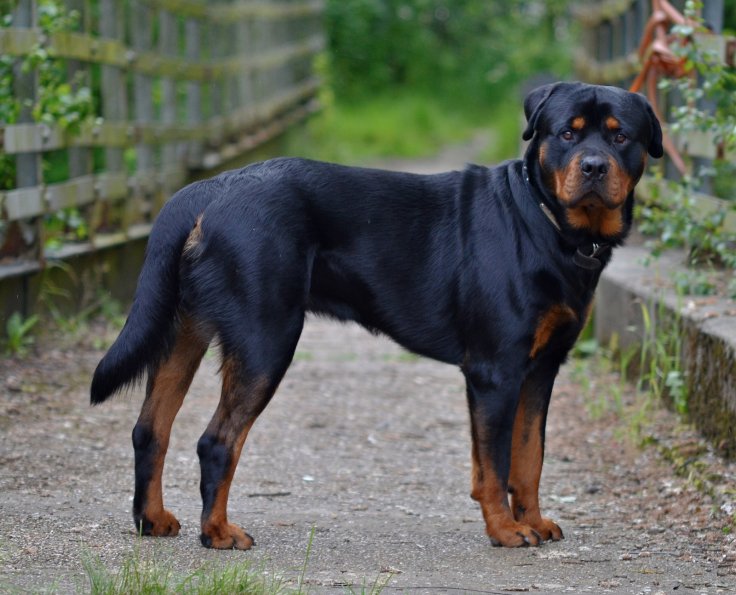
The Rottweiler is a robust and powerful breed that originated in Germany, where they were used for herding cattle and pulling carts. Weighing between 75 to 110 pounds and standing 22 to 27 inches tall, they have a strong, muscular build with a short, black coat marked by rust-colored markings. Known for their steady and confident temperament, Rottweilers are alert, obedient, and devoted, making them excellent working dogs as well as loyal family companions. Their life span typically ranges from 8 to 10 years.
Rottweilers are known for being steady, good-natured, fearless, devoted, alert, and obedient, confident, self-assured. As a moderately energetic breed, they are highly responsive to training and thrive with regular mental and physical activity. They are excellent with children of all ages and friendly with other dogs, making them a popular choice for families and experienced dog owners alike.
Caring for a Rottweiler means committing to moderate grooming every week or two, regular daily walks, and positive-reinforcement training. Their gentle, social nature makes them a wonderful addition to active families.
At a Glance
Quick Facts
- Breed Group:
- Working
- Bred For:
- Cattle drover, guardian, draft
- Origin:
- Germany
- Life Span:
- 8 - 10 years
- Weight:
- 75 - 110 lbs
- Height:
- 22 - 27 in
Temperament
Free Rottweiler Health Guide
Rottweilers can be prone to Hip Dysplasia and other conditions. Get our owner's health checklist and monthly vet tips — free.
- ✓Rottweiler-specific health warning signs
- ✓Vet visit checklist & cost tracker
- ✓Monthly breed health newsletter
Finding similar breeds...
How We Find Similar Breeds
We analyze breed characteristics including temperament, size, appearance, and care needs to identify the most similar dog breeds. This helps you discover alternatives that might be a good match for your lifestyle and preferences.
Explore Related Breeds & Guides
Adopt a Rottweiler
Filter to show only purebred Rottweilers (excludes mixed breeds and crosses)
Find Dogs Near You
Enter your location to discover adoptable pets nearby
How to Adopt a Rottweiler
Follow these steps to ensure a smooth and responsible adoption process. Remember that adopting a dog is a lifelong commitment.
Research the Breed
Learn everything you can about Rottweilers, including their temperament, exercise needs, grooming requirements, and potential health issues.
Find Reputable Sources
Look for adoptable dogs through shelters, rescue organizations, or responsible breeders. Avoid puppy mills and online scams.
Apply for Adoption
Complete an adoption application with your chosen organization. Be prepared to provide references and possibly go through a home visit.
Meet Your Potential Pet
Schedule a meeting with the dog to assess compatibility with you, your family, and any existing pets.
Prepare Your Home
Gather necessary supplies and dog-proof your home before bringing your new pet home.
1Essential Supplies
Food and water bowls, high-quality dog food, collar with ID tag, leash, bed, crate, toys, treats, grooming supplies, and cleaning products for accidents.
2Create a Safe Space
Designate an area where your dog can retreat when feeling overwhelmed. This could be a crate with comfortable bedding or a quiet corner with their bed.
3Remove Hazards
Secure or remove toxic plants, chemicals, small objects that could be swallowed, and foods that are harmful to dogs. Use baby gates if needed to restrict access to certain areas.
4Find a Veterinarian
Research and choose a veterinarian before bringing your dog home, and schedule an initial check-up shortly after adoption.
What is the dog's background and history?
Understanding a dog's past can help you anticipate potential behavior issues and provide appropriate support.
Has the dog been spayed/neutered and vaccinated?
This information is important for planning future veterinary care and understanding any immediate medical needs.
What is the dog's energy level and exercise needs?
Rottweilers typically need regular exercise to stay healthy and happy. Ask about specific exercise requirements.
Has the dog been socialized with other animals and people?
This helps you understand how the dog might interact with your family, friends, and other pets.
Are there any known behavioral or health issues?
Knowing about existing issues helps you prepare for any special care or training needs.
Special Considerations for Rottweilers
- Rottweilers may have specific health concerns that require regular monitoring.
- Consider how the typical Rottweiler temperament aligns with your lifestyle.
- Research the grooming needs of Rottweilers to ensure you can commit to the required maintenance.
- Understand the exercise requirements of Rottweilers to keep them healthy and prevent behavior problems.
- Learn about proper training methods that work well with Rottweilers.
 Rottweiler — Official AKC Breed VideoAmerican Kennel Club
Watch the official AKC video covering temperament, history, traits, and care.
Watch on YouTube →Product Recommendations for Rottweilers
See all →Vet-reviewed picks for food, insurance, crates, brushes, treats, and toys — matched to this breed.
Compare Rottweiler with Similar Breeds
See how the Rottweiler stacks up against other breeds side by side.