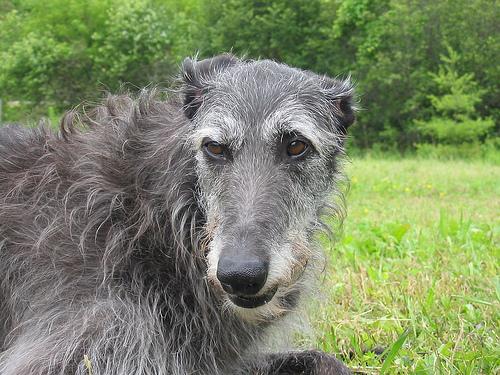
Scottish Deerhound
Temperament
About the Scottish Deerhound
The Scottish Deerhound is one of the oldest breeds in existence, with roots that most historians trace back at least to the 16th century, though Phoenician trader theories push that timeline to over 3,000 years ago. What is documented clearly is that by the Age of Chivalry, the Deerhound had become so prized that no one ranked below an Earl could own one — and a condemned man could reportedly earn his freedom by surrendering a sufficient number of them. This exclusivity nearly erased the breed entirely. When clan culture collapsed after the Battle of Culloden in 1746, the concentrated ownership among Scottish nobility meant the breed's population cratered. It was largely through the efforts of Archibald and Duncan McNeill in the mid-19th century that the breed was systematically revived and stabilized into the form we recognize today.
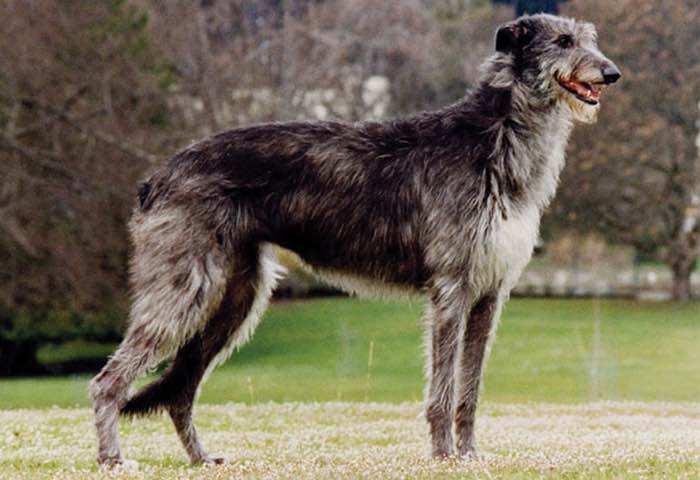
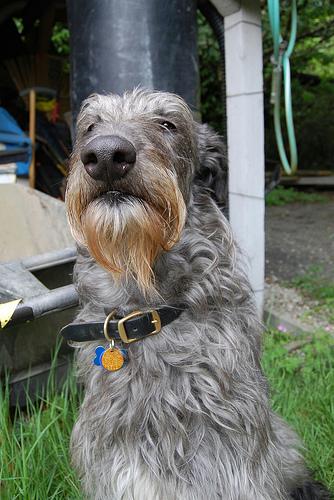
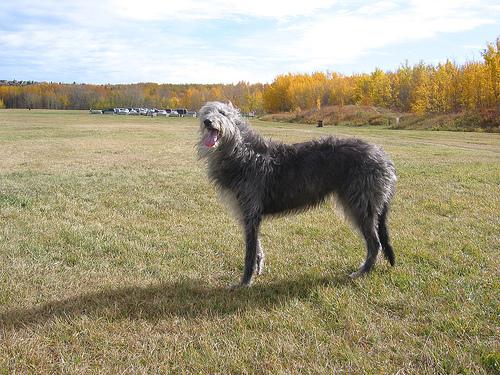
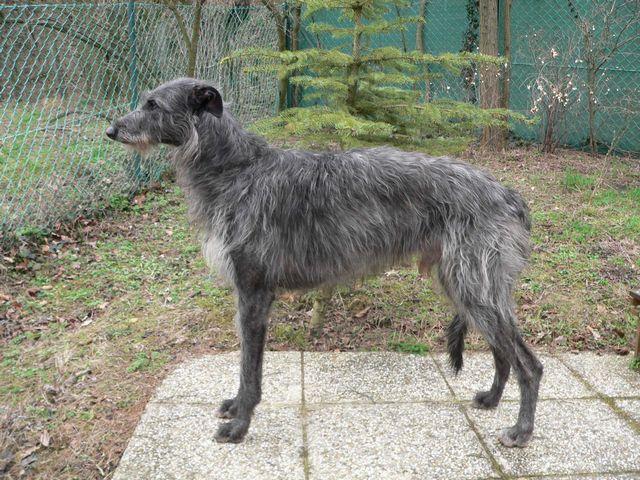
The breed was developed specifically to hunt red deer in the Scottish Highlands — not by scent, but by sight and speed. These are large, rough-terrain athletes capable of pulling down an animal that could weigh 400 pounds. That job shaped everything about the Deerhound: the wiry, weather-resistant double coat that provided insulation against Highland conditions, the deep chest that houses enormous lung capacity, the long legs and flexible spine that produce a galloping stride covering enormous ground. The coat distinguishes it immediately from the smooth-coated Greyhound — the two breeds share a foundational sighthound template, but the Deerhound is heavier-boned, slower to mature, and carries a shaggy, tousled texture that gives it a rough, noble look entirely its own.
The American Kennel Club recognized the Scottish Deerhound in 1886, placing it in the Hound Group, making it one of the earlier breeds in the AKC studbook. Despite that long registration history, the breed ranks 165th out of 205 AKC-recognized breeds in popularity — a number that has barely moved in years. The Scottish Deerhound Club of America, founded in 1906, serves as the AKC parent club and maintains the breed standard, health initiatives, and breeder referrals in the United States. In the UK, the breed is governed by the Scottish Deerhound Club, one of the oldest single-breed clubs in existence.
Compared to the Irish Wolfhound, which shares a rough coat and giant build, the Deerhound is leaner, faster, and more refined — built for speed over endurance. The Wolfhound was bred to tackle wolves and was larger by design. The Deerhound exists in a narrower niche: a coursing hound engineered for one specific prey animal across one specific landscape, and that precision of purpose is still visible in every aspect of the dog.
At a Glance
Quick Facts
- Breed Group:
- Hound
- Bred For:
- Coursing deer
- Origin:
- Scotland
- Life Span:
- 8 - 10 years
- Weight:
- 70 - 130 lbs
- Height:
- 28 - 32 in
💰 Scottish Deerhound Cost Guide
Food · Vet · Grooming · Insurance · Full breakdown
Frequently Asked Questions
What is the temperament of a Scottish Deerhound?
Scottish Deerhounds are known to be docile, friendly, dignified, gentle. This combination of traits makes them excellent companions for families with children. Their temperament is influenced by both genetics and proper socialization from an early age.
How much exercise does a Scottish Deerhound need?
Scottish Deerhounds are high-energy dogs requiring 60+ minutes of vigorous daily exercise and mental stimulation.
How often should I groom my Scottish Deerhound?
Scottish Deerhounds require intensive grooming with daily brushing and regular professional grooming sessions.
How do I train a Scottish Deerhound?
Scottish Deerhounds are highly trainable and typically respond well to positive reinforcement methods.
Are Scottish Deerhounds good with children?
Scottish Deerhounds are excellent with children. Their natural patience, gentle nature, and resilience make them outstanding family dogs. They typically form strong bonds with children and tend to be forgiving of the occasional accidental rough handling that can occur with younger kids. Remember that proper socialization and teaching children appropriate interaction with dogs are always important, regardless of breed.
What makes the Scottish Deerhound unique compared to other dog breeds?
The Scottish Deerhound stands out from other breeds due to its impressive stature and presence, dignified appearance and bearing, rich heritage from Scotland, specialized abilities for coursing deer. This unique combination of characteristics makes them special among dog breeds and appeals to owners who appreciate these distinct qualities. Understanding these traits helps provide appropriate care tailored to their specific needs.
What should I know before getting a Scottish Deerhound?
Before bringing a Scottish Deerhound into your home, potential owners should consider: They have high exercise requirements (4/5) and need an active owner. Their coat requires significant maintenance (4/5) with regular grooming sessions. They typically excel in family environments with children (4/5 child-friendliness). They're typically highly trainable (4/5) and eager to learn. Their large size requires adequate living space. They may be prone to breed-specific health issues including Osteosarcoma, Dilated Cardiomyopathy, Bloat (GDV), Factor I Deficiency, Progressive Retinal Atrophy. Additionally, researching reputable breeders or rescue organizations is essential for finding a healthy, well-socialized Scottish Deerhound. Understanding these factors will help ensure a good match between the breed and your lifestyle, leading to a happy relationship for both you and your dog.
What were Scottish Deerhounds originally bred for?
Scottish Deerhounds were originally bred for coursing deer. As part of the Hound group, they share characteristics with other breeds developed for similar purposes. Understanding your Scottish Deerhound's breeding heritage helps explain many of their natural behaviors and instincts, which can be channeled appropriately through training and enrichment activities. Even though modern Scottish Deerhounds are primarily companions, these inherent traits remain part of their genetic makeup.
How long do Scottish Deerhounds typically live?
The average lifespan of a Scottish Deerhound is 8 - 10 years. With proper care including quality nutrition, regular veterinary check-ups, appropriate exercise, and preventative healthcare, some Scottish Deerhounds may live beyond this range. Genetics, environment, and healthcare all play important roles in determining longevity.
How long do Scottish Deerhounds live?
Scottish Deerhounds have one of the shorter lifespans among dog breeds, typically living 8 to 10 years. The primary driver of early death is osteosarcoma, a bone cancer the breed is genetically predisposed to at rates significantly higher than most other breeds. Dilated cardiomyopathy is a secondary contributor. While some individual Deerhounds do reach 11 or 12 years, owners should enter the relationship with realistic expectations. The shortened lifespan is one of the most emotionally challenging aspects of the breed for devoted owners.
Do Scottish Deerhounds get along with cats and small dogs?
This requires honest assessment rather than a blanket yes or no. Scottish Deerhounds are sighthounds bred to chase and bring down fast-moving prey, and that instinct does not disappear in a domestic setting. Many Deerhounds can coexist peacefully with cats or small dogs they have been raised alongside from puppyhood, particularly when introductions are done carefully. However, the risk of prey drive triggering with fast-moving small animals — especially outdoors — remains real throughout the dog's life. Individual variation matters enormously, and any introduction to small pets should be supervised carefully and extended over time rather than rushed.
How much exercise does a Scottish Deerhound need daily?
Scottish Deerhounds need more exercise than their famously relaxed indoor demeanor might suggest. They are sprinters rather than endurance athletes — the breed is built for explosive speed, not hour-long jogs. Two meaningful walks daily plus the opportunity to run freely in a securely fenced area several times per week covers most adults' needs. The critical detail is the fencing: Deerhounds cannot be exercised off-leash in open areas because prey drive overrides recall. A fenced yard or a safely enclosed coursing field is essential. Puppies and young dogs under 18 months should have exercise limited to protect developing joints, particularly given the breed's elevated bone cancer risk.
Are Scottish Deerhounds good apartment dogs?
A Scottish Deerhound in an apartment is workable only with serious commitment to daily exercise outside the home. They are calm and quiet indoors to a degree that surprises most people — this is not a breed that bounces off walls inside — but their size alone (30-plus inches tall, up to 110 pounds) means a small apartment becomes genuinely cramped. More importantly, an apartment lifestyle requires the owner to be exceptionally consistent about providing outdoor exercise, because a Deerhound with insufficient running opportunity will become restless and may develop destructive behaviors. A home with a securely fenced yard is strongly preferred. The breed's noise level is low, which helps with neighbors, but the exercise requirement is non-negotiable regardless of living situation.
Additional Characteristics
Care Requirements
They are high-energy dogs that need significant daily exercise and mental stimulation.
They have high grooming needs requiring frequent brushing and regular professional grooming.
Highly trainable — quick to learn and eager to please
They are generally very good with children and tend to be patient and tolerant.
Scottish Deerhound
Complete Breed Guide
About the Scottish Deerhound
The Scottish Deerhound is a large sighthound breed originating from Scotland, historically used for hunting deer due to its speed and endurance. Males typically weigh between 85 to 130 pounds and stand 30 to 32 inches tall, while females are slightly smaller. They possess a wiry, rough coat that can be gray, brindle, or fawn, and exhibit a docile, friendly, and dignified temperament, making them excellent companions as well as skilled hunters. Their life expectancy ranges from 8 to 10 years.
Scottish Deerhounds are known for being docile, friendly, dignified, gentle. As a high-energy breed, they are highly responsive to training and thrive with regular mental and physical activity. They are excellent with children of all ages and selective around other dogs, making them a popular choice for families and experienced dog owners alike.
Caring for a Scottish Deerhound means committing to regular grooming (brushing several times a week), vigorous daily exercise, and consistent training from an early age. Their gentle, social nature makes them a wonderful addition to active families.
At a Glance
Quick Facts
- Breed Group:
- Hound
- Bred For:
- Coursing deer
- Origin:
- Scotland
- Life Span:
- 8 - 10 years
- Weight:
- 70 - 130 lbs
- Height:
- 28 - 32 in
Temperament
Free Scottish Deerhound Health Guide
Scottish Deerhounds can be prone to Osteosarcoma and other conditions. Get our owner's health checklist and monthly vet tips — free.
- ✓Scottish Deerhound-specific health warning signs
- ✓Vet visit checklist & cost tracker
- ✓Monthly breed health newsletter
Finding similar breeds...
How We Find Similar Breeds
We analyze breed characteristics including temperament, size, appearance, and care needs to identify the most similar dog breeds. This helps you discover alternatives that might be a good match for your lifestyle and preferences.
Explore Related Breeds & Guides
Adopt a Scottish Deerhound
Filter to show only purebred Scottish Deerhounds (excludes mixed breeds and crosses)
Find Dogs Near You
Enter your location to discover adoptable pets nearby
How to Adopt a Scottish Deerhound
Follow these steps to ensure a smooth and responsible adoption process. Remember that adopting a dog is a lifelong commitment.
Research the Breed
Learn everything you can about Scottish Deerhounds, including their temperament, exercise needs, grooming requirements, and potential health issues.
Find Reputable Sources
Look for adoptable dogs through shelters, rescue organizations, or responsible breeders. Avoid puppy mills and online scams.
Apply for Adoption
Complete an adoption application with your chosen organization. Be prepared to provide references and possibly go through a home visit.
Meet Your Potential Pet
Schedule a meeting with the dog to assess compatibility with you, your family, and any existing pets.
Prepare Your Home
Gather necessary supplies and dog-proof your home before bringing your new pet home.
1Essential Supplies
Food and water bowls, high-quality dog food, collar with ID tag, leash, bed, crate, toys, treats, grooming supplies, and cleaning products for accidents.
2Create a Safe Space
Designate an area where your dog can retreat when feeling overwhelmed. This could be a crate with comfortable bedding or a quiet corner with their bed.
3Remove Hazards
Secure or remove toxic plants, chemicals, small objects that could be swallowed, and foods that are harmful to dogs. Use baby gates if needed to restrict access to certain areas.
4Find a Veterinarian
Research and choose a veterinarian before bringing your dog home, and schedule an initial check-up shortly after adoption.
What is the dog's background and history?
Understanding a dog's past can help you anticipate potential behavior issues and provide appropriate support.
Has the dog been spayed/neutered and vaccinated?
This information is important for planning future veterinary care and understanding any immediate medical needs.
What is the dog's energy level and exercise needs?
Scottish Deerhounds typically need regular exercise to stay healthy and happy. Ask about specific exercise requirements.
Has the dog been socialized with other animals and people?
This helps you understand how the dog might interact with your family, friends, and other pets.
Are there any known behavioral or health issues?
Knowing about existing issues helps you prepare for any special care or training needs.
Special Considerations for Scottish Deerhounds
- Scottish Deerhounds may have specific health concerns that require regular monitoring.
- Consider how the typical Scottish Deerhound temperament aligns with your lifestyle.
- Research the grooming needs of Scottish Deerhounds to ensure you can commit to the required maintenance.
- Understand the exercise requirements of Scottish Deerhounds to keep them healthy and prevent behavior problems.
- Learn about proper training methods that work well with Scottish Deerhounds.
Product Recommendations for Scottish Deerhounds
See all →Vet-reviewed picks for food, insurance, crates, brushes, treats, and toys — matched to this breed.
Compare Scottish Deerhound with Similar Breeds
See how the Scottish Deerhound stacks up against other breeds side by side.